 blog
blog
Alternatives to Grid Electricity for Homes
Table of Contents
- Why Homeowners Look for Alternatives to Grid Electricity
- Off-Grid Solar System with Battery Storage: The Core Option
- Home Wind Turbine Electricity: When It Makes Sense
- Backup Generator for Home Electricity: Strengths and Limits
- Off-Grid Electricity Costs: What to Expect
- How to Choose the Best Alternatives to Grid Electricity for Your Home
- Frequently Asked Questions
Last Updated: October 9, 2026
Why Homeowners Look for Alternatives to Grid Electricity
Rising bills and a desire for control push many property owners to explore alternatives to grid electricity for homes. At MiSolar, we speak with villa owners across the Costa Blanca North every week who want to cut their dependence on utility suppliers, and the reasons are consistent: unpredictable tariffs, summer consumption spikes from air conditioning and pool pumps, and a wish to future-proof their investment.
The case for change is straightforward. Spain's grid operator, Red Eléctrica de España, manages a national network where household tariffs have become harder to predict. For a holiday home that sits empty for months, standing charges alone can feel like money wasted.
So what actually works? Three routes dominate: solar with battery storage, small wind turbines, and backup generators. Each suits a different situation, and choosing badly is expensive. Below, we break down how each performs, what installation involves, and how to decide which fits your property.
Off-Grid Solar System with Battery Storage: The Core Option
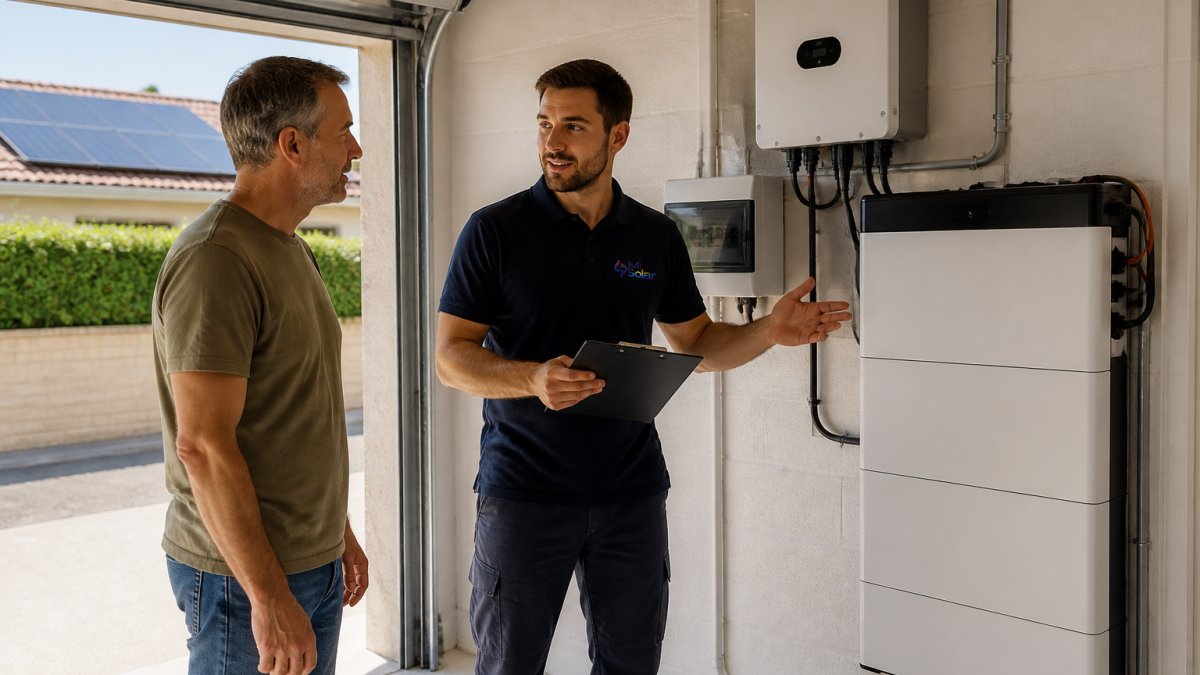
An off-grid solar system with battery storage is the most practical route to energy independence for most homes. Panels generate direct current during daylight, an inverter converts it for household use, and batteries store surplus power for evenings and cloudy spells.
The logic is simple: generate when the sun shines, store what you don't use, draw on it later. For a Costa Blanca North property, that pattern matches daily life well, since peak generation aligns with daytime air conditioning and pool pump demand. If you would rather leave the design and fitting to specialists, Residential Solar Installation and Solar PV Installation Services cover everything from roof assessment to commissioning.
How Much Battery Capacity a Home Needs
Battery capacity is measured in kilowatt-hours (kWh), and sizing depends on what you need to run overnight. A modest holiday home might cover lighting, refrigeration and a few appliances with a smaller bank, while a permanently occupied villa running air conditioning and a heat pump needs considerably more.
The right approach is to start with your consumption, not the hardware. Review a year of bills, identify your heaviest loads, then size storage to cover the hours when panels produce nothing. Oversizing batteries adds cost without benefit; undersizing leaves you drawing from the grid at the worst possible time.
Installation and Maintenance Requirements
Installation involves roof assessment, mounting, wiring, inverter and battery placement, plus connection and commissioning. A common mistake is choosing a battery location that gets too hot; performance and lifespan both suffer in high temperatures, so a shaded, ventilated spot matters.
Maintenance is lighter than most people expect. Panels need occasional cleaning to remove dust and salt film, especially near the coast. Batteries and inverters need periodic checks, and monitoring software flags problems early. What most guides miss is that a well-designed system with remote monitoring catches issues before they become expensive.
Home Wind Turbine Electricity: When It Makes Sense
Home wind turbine electricity suits properties with consistent, unobstructed wind and enough land to site a turbine safely. It is rarely the right first choice for a typical villa.
Turbines need steady airflow, not occasional gusts. Trees, neighbouring buildings and terrain all create turbulence that reduces output and stresses the machine. In built-up coastal areas, roof-mounted turbines often disappoint because wind at roof level is chaotic rather than smooth.
Where turbines do earn their place is on larger plots or rural properties with open exposure. Even then, most owners pair a turbine with solar, since wind and sun rarely peak at the same time. That combination smooths generation across the year. Planning permission and noise considerations also apply, so check local requirements before committing.
Backup Generator for Home Electricity: Strengths and Limits
A backup generator for home electricity provides reliable power on demand, but it is a support act, not a primary solution. Generators run on fuel, need servicing, and produce noise and emissions, which makes them unsuitable as a full-time supply for most homes.
Their real value is resilience. During an outage, or in a deep winter spell when solar output drops, a generator keeps essentials running. For an off-grid property, that safety net can be the difference between comfort and inconvenience.
The trade-offs are real. Fuel costs accumulate, storage of fuel raises safety questions, and engines need regular running to stay reliable. A common mistake is buying an oversized generator; it burns more fuel and costs more to maintain than a correctly sized unit. Treat a generator as insurance, and size it for essentials only.
| Option | Best For | Main Limitation | Maintenance Level |
|---|---|---|---|
| Off-grid solar with battery storage | Most homes, year-round use | Needs roof space and battery capacity | Low: cleaning and periodic checks |
| Home wind turbine | Open, windy plots with land | Poor performance in turbulent urban wind | Moderate: mechanical servicing |
| Backup generator | Outage cover and winter backup | Fuel, noise and emissions | Higher: regular servicing and fuel care |
Off-Grid Electricity Costs: What to Expect
Off-grid electricity costs vary widely depending on consumption, battery capacity and how much backup you want. There is no single figure that applies to every home, and any quote that ignores your actual usage is guesswork.
The honest answer is that pricing depends on system size, battery choice, roof complexity and whether you add extras like EV charging or a heat pump. We always recommend starting with a consumption review, then designing to that. This avoids paying for capacity you will never use.
Running Costs and Payback
Running costs for solar are low once installed: sunlight is free, and maintenance is minimal. Generators are the opposite, with ongoing fuel and servicing bills. That difference matters over a system's life.
Payback depends on what you were paying before. Homes with high summer bills and heavy air conditioning use tend to see the fastest returns, because they were spending the most on grid power. For a tailored estimate, the European Commission's guidance on renewable energy for households is a useful starting point for understanding the wider context.
How to Choose the Best Alternatives to Grid Electricity for Your Home
Choosing among alternatives to grid electricity for homes comes down to matching technology to your site, your usage and your budget. Work through these criteria in order:
- Assess your site: roof orientation, shading and available land for a turbine.
- Review consumption: a full year of bills reveals your real demand.
- Decide on backup: how much resilience do you need, and how often?
- Check local requirements: municipal and regional rules affect what you can install.
- Plan for maintenance: who will service the system, and how easily can they reach you?
A frequent mistake is prioritising upfront price over design quality. The cheapest quote often reflects a system that was never properly sized. The real difference between a system that performs and one that disappoints usually comes down to design and installation quality, not the brand on the panel.
For most homeowners, solar with battery storage is the strongest foundation, with a generator as optional backup. If your property also runs heavy summer loads, pairing solar with energy-efficient cooling guidance from the International Energy Agency helps you size the system realistically, and Air Conditioning Installation in Jávea & Costa Blanca North can ensure that cooling demand is met as efficiently as possible.
Cutting the cord from the grid is a bigger decision than it first appears, and the right answer depends on your roof, your consumption and how you use the property. At MiSolar, we manage the entire process in-house, from engineering and permitting through to on-site works, with systems tailored to your lifestyle and post-commissioning monitoring to confirm performance. With 300+ installations and a 5.0-star rating, we design for your actual usage rather than a generic template. Get a quote from MiSolar and take the first step towards energy independence.
Frequently Asked Questions
What are the alternatives to grid electricity for a home?
The main options are an off-grid solar system with battery storage, a small home wind turbine, a backup generator, or a combination of these. Solar with batteries suits most homes because it produces power silently and needs little maintenance. A generator works as a backup rather than a sole source because of fuel and servicing. Wind can add output in exposed locations. Many homes combine solar and batteries with a generator for the darkest winter weeks.
Can a house run entirely on solar power and batteries?
Yes, with the right sizing. You need enough panel capacity to cover daily use plus winter shortfalls, and battery storage sized for evening and overnight demand. A typical home with average consumption needs a system designed around its own usage pattern, not a generic package. An off-grid solar system with battery storage can cover a full year if it is sized for the worst month, not the best one.
How do batteries provide electricity when solar panels are not generating?
Batteries store excess energy produced during daylight and release it at night or during cloudy spells. A battery inverter converts the stored direct current into the alternating current your appliances use. Capacity is measured in kilowatt-hours, so a 10 kWh battery can run roughly a day of basic household demand. Most off-grid setups combine enough battery capacity for one to two days of autonomy.
Is it cheaper to go off-grid or stay connected to the electricity grid?
It depends on your consumption and how often you are at the property. Off-grid electricity costs are mostly upfront: panels, batteries, inverter, installation and permits. After that, running costs are low because there is no monthly supply charge. For a holiday home used a few months a year, the numbers often favour a smaller grid-tied or hybrid system rather than full disconnection. A proper assessment compares both scenarios.