
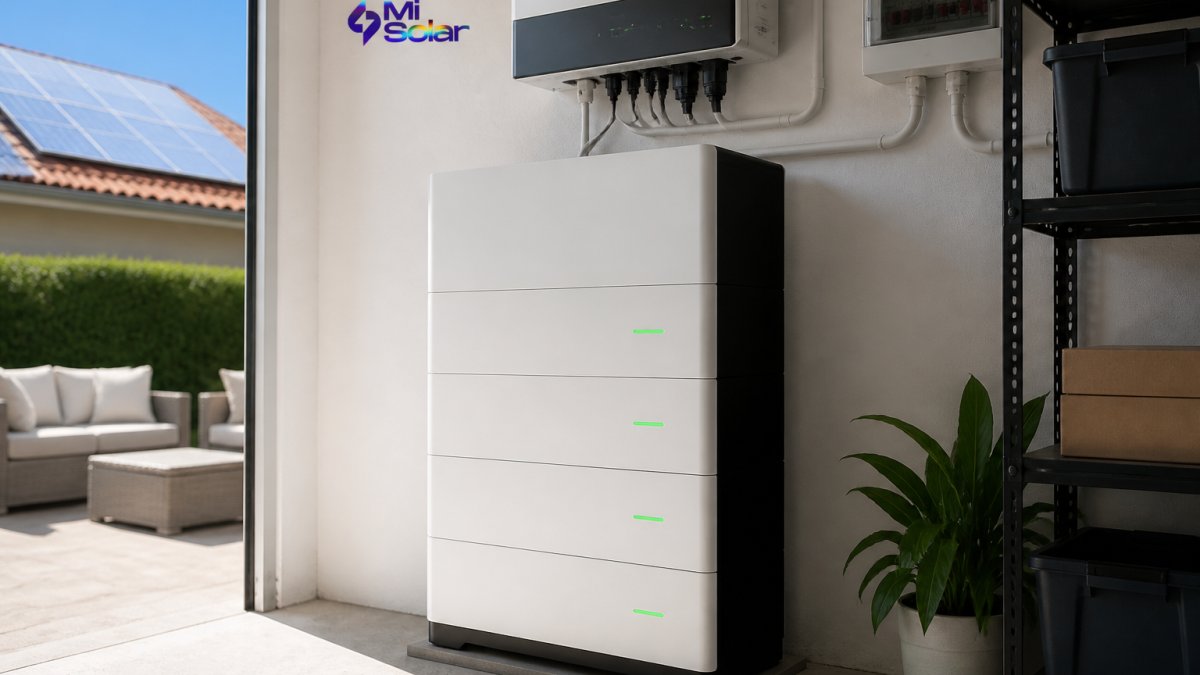
 listicle
Best Home Solar Batteries: 2026 Review and Comparison
Table of Contents
- Quick Comparison: Best Home Solar Batteries for 2026
- How We Evaluated These Solar Batteries
- 1. MiSolar: Full-Service Design, Installation and Storage
- 2. Tesla Powerwall 3: The All-in-One Favourite
- 3. FranklinWH aPower 2: Peak Power for Heavy Loads
- 4. Enphase IQ 5P: Modular Storage for Microinverter Systems
- 5. SolarEdge Home Battery: DC-Coupled Efficiency
- 6. Canadian Solar EP Cube: Compact and Aesthetic
- Solar Battery Cost Comparison: What Actually Drives the Price
- Solar Battery Lifespan and Maintenance: What to Expect
- How to Choose a Solar Inverter to Match Your Battery
- Frequently Asked Questions
Last Updated: 27 September 2026
Quick Comparison: Best Home Solar Batteries for 2026
Choosing the best home solar batteries in 2026 comes down to three things: usable capacity, peak power, and who handles the paperwork. Pairing panels with storage lets homeowners cut electricity bills to near zero, and the right battery decides how well that works.
This guide from MiSolar compares six storage systems on capacity, efficiency, and support. Below is the quick verdict, then a full breakdown of each option.
| Battery | Usable Capacity | Coupling | Best For |
|---|---|---|---|
| MiSolar (full service) | Tailored to your consumption | AC or DC | Turnkey projects with permits handled |
| Tesla Powerwall 3 | 13.5 kWh | AC or DC | Whole-home backup |
| FranklinWH aPower 2 | 15 kWh | AC | Heavy appliance loads |
| Enphase IQ 5P | 5 kWh per unit | AC | Existing microinverter systems |
| SolarEdge Home Battery | 10 kWh | DC | SolarEdge inverter owners |
| Canadian Solar EP Cube | Modular | Hybrid | Tight, visible spaces |
How We Evaluated These Solar Batteries
We scored each system on usable capacity, peak power output, round-trip efficiency, warranty length, and how easily it integrates with existing hardware. Installation complexity and after-sales support carried equal weight.
A common mistake is buying on headline capacity alone. A battery that cannot cover your oven, pool pump, and air conditioning at the same moment will still pull from the grid.
1. MiSolar: Full-Service Design, Installation and Storage
MiSolar manages engineering, permitting, procurement, and on-site works in-house, so nothing falls between contractors.
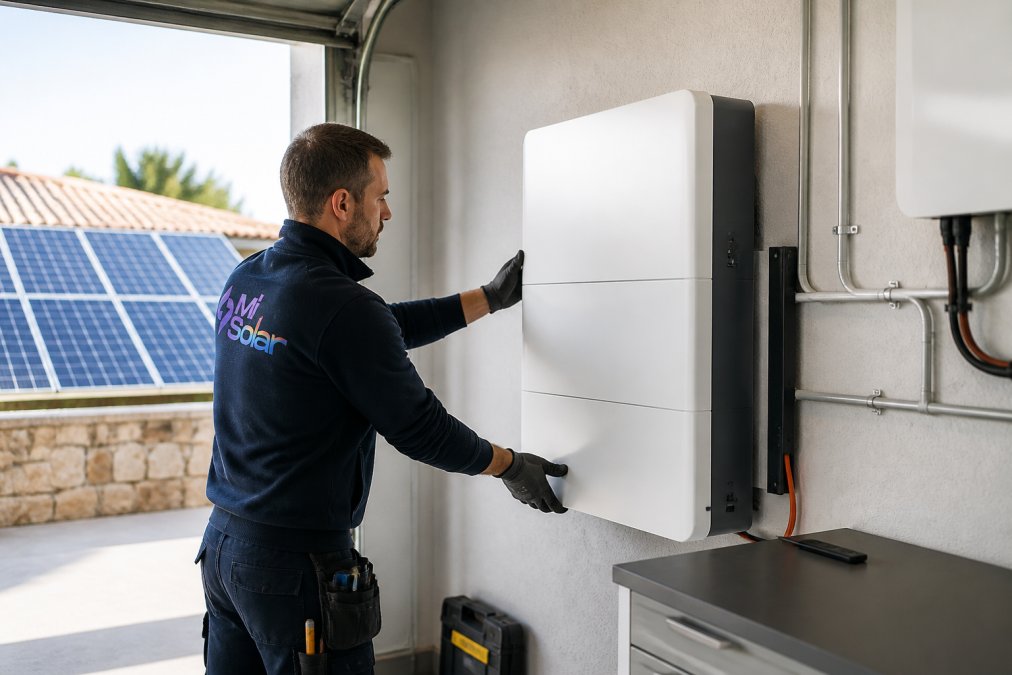
Storage is sized around your actual consumption and lifestyle, not a generic package. Local knowledge of roof types, municipal requirements, and panel orientation means fewer surprises during approval.
- Pros: One point of contact from survey to commissioning; financing plans available; monitoring setup and performance checks after handover.
- Cons: Pricing depends on system size, so you need a quote rather than a shelf price.
- Best for: Owners who want the permits, installation, and long-term support handled by one team.
With 300+ installations and a 5.0-star rating, MiSolar suits buyers who value accountability. Alongside storage, the same team can handle Residential Solar Installation and Solar PV Installation Services and even an EV charger installation, so the array, battery, and car charging are specified together rather than bolted on piecemeal.
2. Tesla Powerwall 3: The All-in-One Favourite
Tesla's third-generation unit bundles a solar inverter inside the battery, which simplifies wiring and cuts component count. That integration is why it dominates the all-in-one category.
It delivers strong continuous power for whole-home backup and carries a 10-year warranty. The trade-off is availability: high demand in many markets means installation wait times stretch out.
- Pros: Integrated inverter; efficient power distribution; proven reliability.
- Cons: Long lead times; limited installer flexibility.
3. FranklinWH aPower 2: Peak Power for Heavy Loads
FranklinWH built the aPower 2 for households that run large appliances simultaneously. Each unit holds 15 kWh with 90% round-trip efficiency and class-leading peak output.
If your home has a pool pump, heat pump, and air conditioning, this is the specification that matters. It scales by adding units, though the cost per kWh sits above entry-level models.
- Pros: Exceptional peak power; scalable capacity.
- Cons: Higher cost per kWh than budget options.
4. Enphase IQ 5P: Modular Storage for Microinverter Systems
The IQ 5P is the natural pick if you already run Enphase microinverters. Its AC-coupled, modular design lets you start with one 5 kWh unit and add capacity later without rewiring the whole system.
Transition to backup power is fast, and the architecture is highly reliable. Step outside the Enphase ecosystem, though, and you lose much of the benefit.
- Pros: Seamless integration with existing hardware; expandable.
- Cons: Requires Enphase components for best performance.
5. SolarEdge Home Battery: DC-Coupled Efficiency
SolarEdge's battery is DC-coupled, which reduces conversion losses between panels and storage. For anyone already using SolarEdge inverters, that efficiency gain is essentially free.
Everything reports into one monitoring app, so production and storage sit on a single dashboard. Compatibility outside the SolarEdge ecosystem is limited, which is the main drawback.
- Pros: High efficiency from DC coupling; unified monitoring.
- Cons: Ecosystem lock-in.
6. Canadian Solar EP Cube: Compact and Aesthetic
The EP Cube targets homeowners who care about how storage looks. Its compact, modular body and integrated hybrid inverter fit neatly into garages and utility rooms.
The mobile app makes daily energy management straightforward, and installation is quick. As a newer entrant, it has a shorter track record than legacy brands.
- Pros: Space-efficient; easy to install and expand.
- Cons: Newer to the market.
Solar Battery Cost Comparison: What Actually Drives the Price
Cost is not a single number. It reflects capacity, coupling type, installation complexity, and whether permits are included. A cheaper quote often excludes the electrical work or the paperwork.
Compare quotes on total delivered cost, not the battery unit alone. Financing spreads the outlay, and many systems reach break-even in as little as 2-5 years through avoided bills.
Solar Battery Lifespan and Maintenance: What to Expect
Most modern lithium batteries are designed for long service with minimal intervention. LFP chemistry in particular handles daily cycling well and needs no routine topping up.
What shortens lifespan is heat and constant deep discharge. A shaded or poorly ventilated mounting spot does more damage than daily use ever will.
- Confirm the warranty covers capacity degradation, not just failure
- Check the battery is mounted out of direct summer sun
- Set the system to reserve a backup percentage
- Review monitoring data monthly for output drops
How to Choose a Solar Inverter to Match Your Battery
The inverter decides how well panels and battery talk to each other. DC-coupled systems suit new builds where everything is specified together; AC-coupled systems retrofit onto existing panels.
If you already own microinverters, stay in that ecosystem. If you are starting fresh, a hybrid inverter gives you the most flexibility for future expansion.
This is where a full-service provider earns its keep. MiSolar designs the whole system, so the inverter, battery, and array are matched before anything is ordered.
Frequently Asked Questions
Are solar batteries worth the investment for residential properties?
They are worth it when your goal is cutting grid reliance and protecting against rising tariffs. A battery lets you store surplus daytime generation and use it in the evening, when consumption peaks. Payback depends on your consumption profile, battery capacity and how much you export versus self-consume. Homes with high evening use and limited export compensation see the fastest return.
How long do home solar batteries typically last?
Most lithium home solar batteries carry a 10-year warranty and are rated for several thousand charge cycles. In practice, expect the unit to hold useful capacity well beyond the warranty period if it is not cycled to full depth every day. Lifespan shortens with extreme heat, so correct ventilation and siting matter as much as the brand you pick.
What is the difference between AC-coupled and DC-coupled battery systems?
An AC-coupled battery connects to your existing solar setup through the AC side, which suits homes adding storage later or using microinverters. A DC-coupled battery connects on the DC side before the inverter, which usually means fewer conversion losses and higher round-trip efficiency. The right choice depends on your current inverter and whether you plan to expand.
Do I need a solar battery if I am connected to the grid?
Not strictly, but a grid connection alone leaves you buying evening power at retail rates. A battery shifts your self-consumption window into the evening, reduces what you draw from the grid and gives backup during outages. If your daytime generation is already exported for little return, storage is the more valuable use of that energy.
What are the safety regulations for lithium-ion battery installations?
Installed storage must comply with the applicable Spanish electrical regulations and the manufacturer's siting requirements, including ventilation, fire separation and protection devices. A qualified installer handles the certification and documentation. Ask for the installation certificate and confirm the battery carries the relevant European conformity marking before signing.
High electricity bills and grid dependence are solvable problems, but only with a system sized to your home rather than a generic package. MiSolar handles the engineering, permits, procurement, and installation in-house, offers financing plans to spread the cost, and provides post-commissioning monitoring so performance stays on track. Get a quote from MiSolar and take the first step toward cutting your bills to €0.