 Listicle
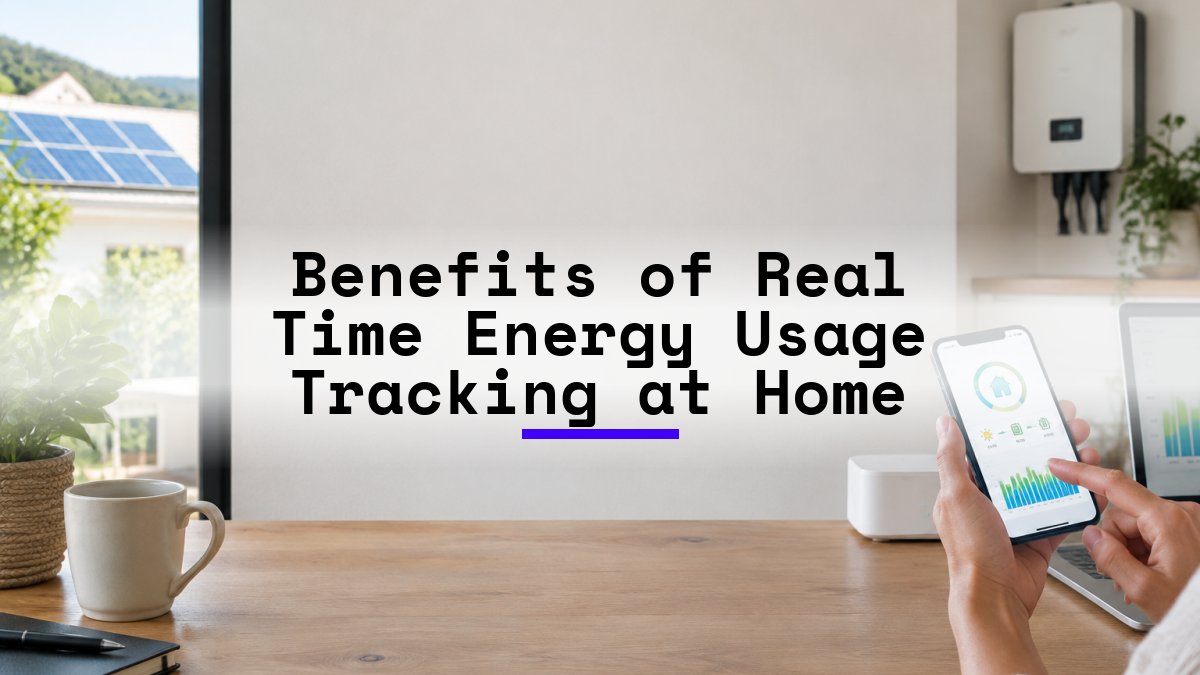
Benefits of Real Time Energy Usage Tracking at Home
Last Updated: November 13, 2026
Quick Summary
Energy usage tracking measures your electricity consumption continuously and displays it in real time, so you can act while it still matters instead of waiting for a monthly bill. Live data lets you catch consumption spikes, shift heavy loads into cheaper tariff periods, and raise your solar self-consumption.
- A whole-home monitor uses CT clamps on the main incoming cables to give one live total.
- Circuit-level monitors attribute consumption to circuits such as pool pump, kitchen and hot water.
- Base any decision to lower contracted power on at least a full season of readings.
- Shifting a wash cycle or pool pump from punta into valle moves the same kWh into a cheaper period.
- Monitoring shows your real self-consumption rate so you can time heavy loads for peak generation.
Table of Contents
- Why Real Time Energy Usage Tracking Changes How You Use Power
- What a Home Energy Monitoring System Actually Shows You
- Cutting Electricity Costs on Spanish Tariffs With Better Data
- Solar Self-Consumption: Using More of What Your Panels Generate
- Energy Monitoring for Heat Pumps, Batteries and EV Charging
- Book a Monitoring and Solar Review With MiSolar
- Frequently Asked Questions
Why Real Time Energy Usage Tracking Changes How You Use Power
Most homeowners only discover how much electricity they've wasted when the bill arrives, weeks after the damage is done. Benefits of real time energy usage tracking work differently: they show you consumption as it happens, so you can act while it still matters. At MiSolar, we design and install solar systems for homes that want control over their power, not just panels on a roof.
Energy usage tracking is the practice of measuring electricity consumption continuously and displaying it in real time, rather than waiting for a monthly utility statement. The difference sounds small. In practice, it changes behaviour. When you can see a spike the moment it happens, you turn things off. When you only see it a month later, you've already paid for it.
Below, we'll show you exactly what a monitoring system reveals, how it interacts with Spanish electricity tariffs, and where it pays off fastest for solar owners.
What a Home Energy Monitoring System Actually Shows You
A home energy monitoring system reads the current flowing through your installation and translates it into live figures: watts being drawn right now, kilowatt-hours consumed today, and how that compares with yesterday or last week. That's the whole point: data visibility in real time, not a post-mortem.
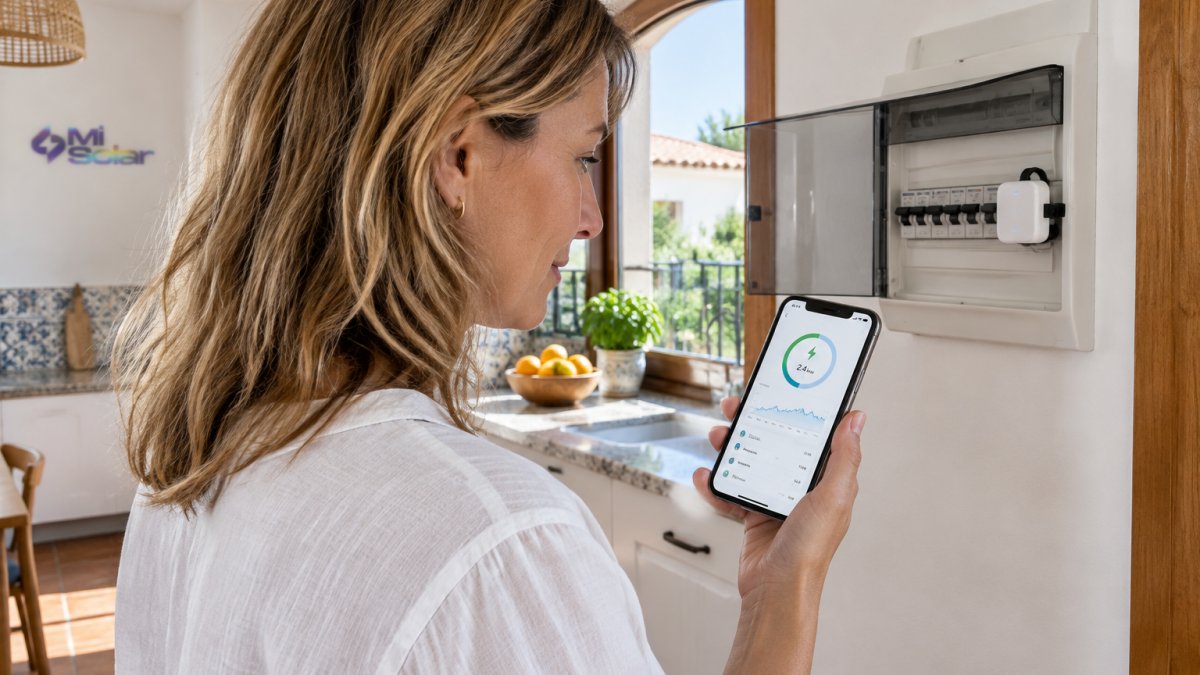
Monitoring can reveal what runs overnight. A second fridge, a pool pump on a timer, a router and a TV on standby all add up. Once you can see them, you can decide.
Live Load Measurements and Consumption Spikes
Live load measurements show exactly which appliance is drawing power at any moment. A consumption spike, like a heat pump starting up or an oven switching on, appears instantly. That's how you catch the culprit instead of guessing. Most systems sample every few seconds and store the history in an app, so you can compare a spike against the time of day and against the tariff period it fell into.
How an Electricity Usage Monitor Differs From a Smart Meter
An electricity usage monitor gives you second-by-second detail inside the home, broken down by circuit or appliance. A smart meter records totals for billing and reports to your supplier. They answer different questions: the meter tells you what you owe, the monitor tells you why.
Choosing and Installing a Monitor: What to Check
There are three common configurations. A whole-home monitor uses current transformers (CT clamps) around the main incoming cables and gives one live total. A circuit-level monitor adds clamps to individual circuits, pool pump, kitchen, hot water, so you can attribute consumption. A plug-in monitor sits between an appliance and the socket and is useful for spot checks but not for whole-home visibility.
Before buying, check three things: whether the unit supports the number of CT clamps your panel needs, whether it works with single-phase or three-phase supply (many villas in the Alicante region are three-phase), and whether the app reports in kW and kWh with a history you can export. Installation inside the consumer unit involves opening live equipment, so it is a job for a qualified electrician.
Wi-Fi reliability matters too: if the monitor loses connection, it should buffer data locally and upload when the link returns, otherwise you lose the history you bought it for.
Here is how the three common monitor configurations compare.
| Configuration | What it measures | Best for |
|---|---|---|
| Whole-home monitor | One live total via CT clamps on main cables | Overall live consumption |
| Circuit-level monitor | Individual circuits such as pool pump, kitchen, hot water | Attributing consumption to circuits |
| Plug-in monitor | Single appliance at the socket | Spot checks, not whole-home visibility |
Cutting Electricity Costs on Spanish Tariffs With Better Data
The CNMC's consumer guidance on electricity billing sets out how those components combine, and your own supplier's contract states your contracted kW and your period times.
Most households never check whether their contracted power matches their real peak demand. That is where monitoring earns its keep. Live data shows your actual peak draw in kW, minute by minute. If your monitor consistently shows you never exceed, say, 3.5 kW during the punta period, you may be paying for capacity you do not use, and reducing contracted power lowers the fixed part of every bill, month after month, regardless of consumption. If you routinely spike above your contracted level, the ICP (the control switch) will trip, and the fix is either to raise the contracted power or to stagger loads so the oven, heat pump and pool pump do not all start together.
Watch out: lowering contracted power based on a mild week of data is a common mistake, a cold snap with the heat pump and oven running together can push you over the limit, so base the decision on at least a full season of readings, including the summer peak in coastal Alicante when air conditioning and pool pumps run hardest.
The energy term is the second lever. Shifting a wash cycle, the dishwasher or the pool pump from punta into valle moves the same kWh into a cheaper period, and a real-time monitor is what tells you whether the shift actually happened. For a deeper look at how to act on those figures at home, read our guide on how to optimize solar energy consumption at home.
Solar Self-Consumption: Using More of What Your Panels Generate
Solar self-consumption is the share of the electricity your panels produce that your household uses directly, instead of exporting it to the grid. Every kilowatt-hour you consume on site is worth more to you than one you sell back, because you avoid buying at retail price. Monitoring is how you find out what your real self-consumption rate is.
Without live data, you're guessing. With it, you can shift heavy loads, like the washing machine, dishwasher or pool pump, into the middle of the day when generation peaks. Small timing changes can lift self-consumption noticeably, and the effect compounds over a year.
If you want to compare the software side of this, our article on the best home energy management software covers the options, and for households that want control from anywhere, there's a separate guide on how to manage solar energy remotely.
Energy Monitoring for Heat Pumps, Batteries and EV Charging
Energy monitoring for heat pumps matters because heat pumps are the largest single load in many modern homes, and their draw varies with outside temperature. Watching that load tells you whether the system is running efficiently or fighting a setting it shouldn't.
Batteries and EV charging follow the same logic. A battery's charge and discharge cycles, and an EV charger's draw, are exactly the kind of data a monitor captures. If you're planning storage, our solar battery storage and backup power team handles installation and system design, and if you want to charge a car from your own roof, we install solar panels to charge your electric car across the area.
Book a Monitoring and Solar Review With MiSolar
The gap between a system that performs and one that quietly underperforms usually comes down to data nobody looked at. We've completed more than 300 installations and hold a 5.0 rating, and post-commissioning support includes monitoring setup and performance checks.
We manage engineering, permitting, procurement and installation in-house, and we know the roof types and municipal requirements across the Costa Blanca North. If you're looking for a solar installer in Jávea, we'll review your consumption, tailor the system to your lifestyle, and set up monitoring so you can see the results yourself.
Your electricity bill is a lagging indicator. By the time it arrives, the decisions that shaped it are already made. MiSolar designs and installs solar systems with monitoring built in, manages every permit in-house, and offers financing plans that spread the investment. Get started with MiSolar and see exactly where your power goes, from the first day your system runs.
Frequently Asked Questions
What is the difference between an energy monitor and a smart meter?
A smart meter is installed by your distribution company and records total consumption for billing, usually in 15-minute to hourly intervals. An electricity usage monitor clips onto your meter or fuse box and sends live readings to an app, often second by second, and can break usage down by circuit. The two work well together: the smart meter tells you what you are charged, while energy usage tracking shows which appliances drove that charge and when.
Can real-time energy usage tracking help lower electricity bills?
It can, mainly by exposing waste you did not know about. Standby loads, a pool pump running longer than needed, or heating and cooling fighting each other all show up clearly once you see live data. Shifting heavy loads such as laundry or dishwashing into your cheapest tariff window also reduces cost without reducing comfort. The savings depend on how much unnecessary usage you find and change, so treat the monitor as a diagnostic tool rather than a guaranteed discount.
How does monitoring help you use more of your solar power?
Solar self-consumption improves when you run appliances while the panels are producing. Real-time data shows your generation curve against your consumption curve, so you can see exactly when surplus power is being exported instead of used. Moving the pool pump, washing machine or EV charging into those hours raises the share of solar you consume directly.
Can real-time monitoring help manage a home battery and heat pump?
Yes. Energy monitoring for heat pumps shows how much power the unit draws at different outdoor temperatures, which helps you set schedules that avoid peak tariff periods. For a battery, live data reveals whether it is charging from solar surplus or from the grid, and whether it empties too early in the evening. Checking both together lets you tune charge and discharge settings so the system covers your evening demand rather than exporting cheap power.