 How-to
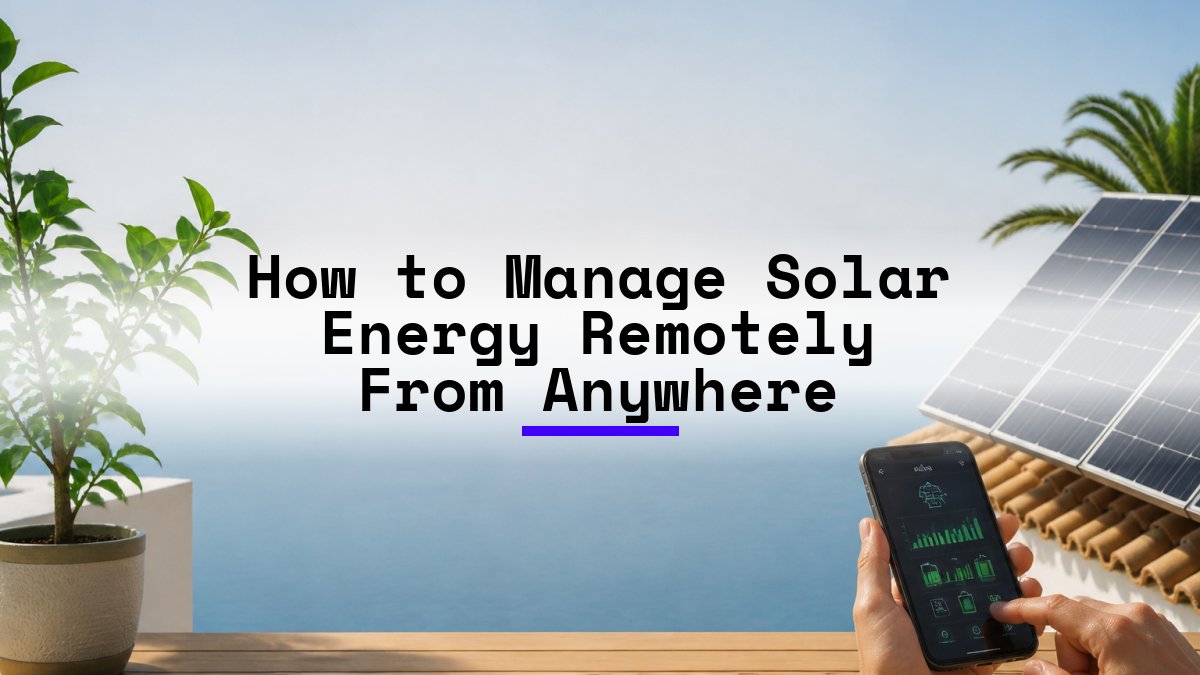
How to Manage Solar Energy Remotely From Anywhere
Last Updated: October 30, 2026
Quick Summary
To manage solar energy remotely, you need a working internet connection at the property, a monitoring app linked to your inverter, and clear remote access to your battery and heating controls. Configure alerts and a reference curve in the first week so you can spot underperformance from anywhere.
- Keep the router alive during outages with a small uninterruptible power supply.
- Set your tariff, name your arrays, and turn on alerts in the first week.
- A drop of more than a fifth on a clear day usually means shading, dirt, or a fault.
- Check battery state of charge daily and review charge cycles weekly.
- Run heating and hot water in the middle of the day and adjust the schedule monthly.
Table of Contents
- What You Need Before You Can Manage Solar Energy Remotely
- Setting Up Your Solar Panel Monitoring App
- How to Monitor Solar Panel Performance and Spot Underperformance
- Solar Battery Monitoring When You Are Away
- How to Run a Heat Pump on Solar Power Remotely
- Book a Remote Monitoring Setup Check with MiSolar
- Frequently Asked Questions
What You Need Before You Can Manage Solar Energy Remotely
To manage solar energy remotely, you need three things: a working internet connection at the property, a monitoring app linked to your inverter, and clear remote access to your battery and heating controls.
Remote monitoring setup depends on the hardware in place. Here is a checklist to work through before handing over any system.
The hardware and connection checklist
- A Wi-Fi router that stays powered when you are away
- A monitoring dongle or gateway plugged into the inverter
- A battery management system with remote access enabled
- A heat pump controller with an app or cloud login
- Backup power for the router during grid outages
The router is the weak link. If the power trips while you are abroad, the router dies and your system goes dark. A small uninterruptible power supply keeps it alive.
Before you can manage a solar system from anywhere, work through this remote access checklist.
| Item | Why it matters |
|---|---|
| Wi-Fi router that stays powered when away | Keeps the system connected |
| Monitoring dongle or gateway plugged into inverter | Links inverter to the app |
| Battery management system with remote access enabled | Allows remote battery monitoring |
| Heat pump controller with app or cloud login | Enables remote heating control |
| Backup power for the router during grid outages | Keeps router alive if power trips |
Setting Up Your Solar Panel Monitoring App
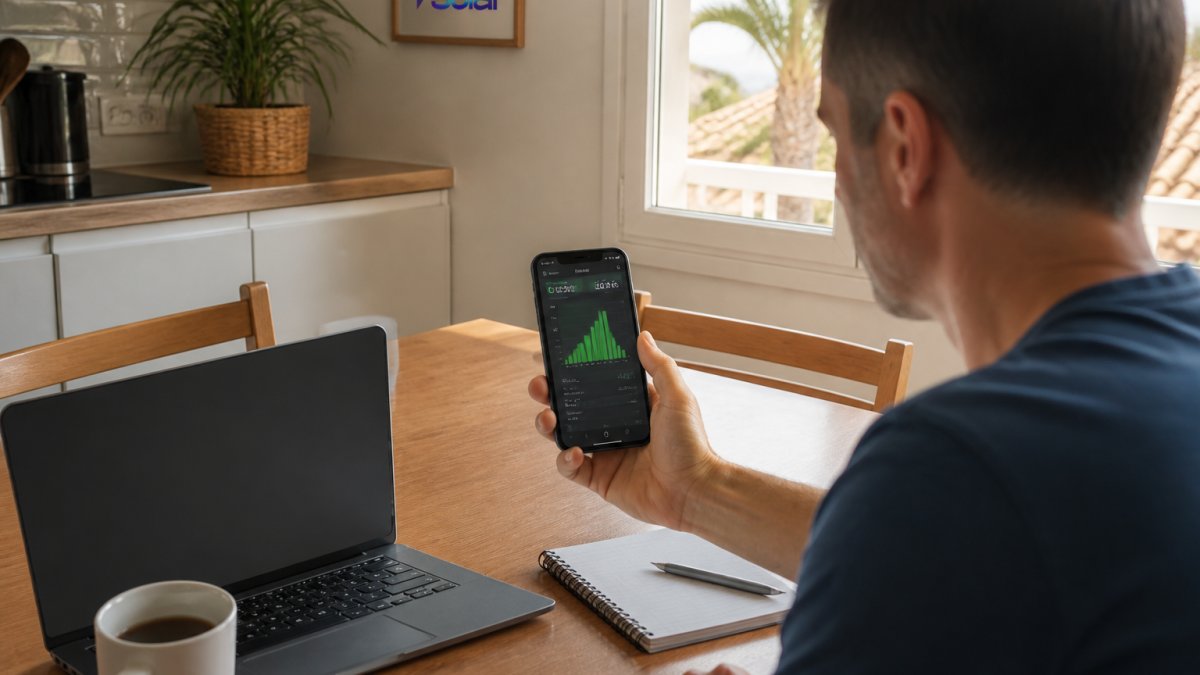
Your first week with a solar panel monitoring app sets the baseline for every comparison you make later. Configure it properly and you will spot problems fast. Rush it and you will stare at numbers with no idea what normal looks like.
What to configure in the first week
- Set your tariff and export rate so savings are calculated in euros, not generic units
- Name your arrays if you have panels on more than one roof face
- Turn on alerts for zero production, battery faults, and inverter errors
- Record a full sunny day as your reference curve
- Add a second user so a family member or caretaker gets alerts too
Watch out: skipping the alert setup is the most common mistake. Without alerts, a silent inverter fault can cost you weeks of production before anyone notices.
For a full walkthrough of how monitoring is commissioned during an installation, see our solar PV installation service.
How to Monitor Solar Panel Performance and Spot Underperformance
Compare today's output against your reference curve from week one. A drop of more than a fifth on a clear day usually means shading, dirt, or a fault. Check the app before you call anyone.
Three signals matter most:
- Sudden drops point to a fault or a tripped breaker
- Gradual declines usually mean dust, pollen, or bird droppings
- One array lagging suggests shading or a string problem
Dust and pollen can reduce panel output over time, so cleaning is worth considering (No more dirt and dust: Nanotechnology solution for photovoltaic systems | News | CORDIS). If you spot a persistent gap, contact MiSolar for a performance check. Our solar panel maintenance guide for villas covers cleaning and inverter monitoring in more depth.
Solar Battery Monitoring When You Are Away
Remote battery monitoring tells you two things: how much charge you hold and whether the system is behaving. Check state of charge daily and review charge cycles weekly.
Here is what to watch:
- State of charge should recover to full on sunny days
- Charge and discharge cycles should stay within the maker's limits
- Fault codes need action, not a wait-and-see
- Backup reserve should stay topped up if you rely on it for outages
If your system uses a virtual battery instead of physical units, monitoring works through the provider's platform. Battery storage and remote access options can be discussed directly with MiSolar. You can review the solar battery storage and backup power systems they install.
How to Run a Heat Pump on Solar Power Remotely
Running a heat pump on solar power remotely means setting schedules that match production, then adjusting from your phone. See the air source heat pump service to book a setup that pairs with solar. You cannot control the sun, but you can control when the heat pump draws power.
Set heating and hot water to run in the middle of the day, when panels produce most. In winter, expect less solar and more grid draw. Adjust the schedule monthly rather than weekly.
A few practical rules:
- Pre-heat the house during peak production hours
- Set a lower overnight temperature to cut demand
- Use the app's holiday mode to avoid heating an empty home
- Check consumption weekly against your production curve
Watch out: running a heat pump on a fixed schedule set in summer will overheat the house and waste power by winter.
Book a Remote Monitoring Setup Check with MiSolar
Managing solar from a distance works when the setup is right and someone checks it. That is where we come in. MiSolar has completed over 300 installations, with a 5.0-star rating.
MiSolar handles engineering, permitting, procurement, and on-site works in-house, and provides post-commissioning support including monitoring setup and performance checks. If you are adding new loads to a solar system, MiSolar also offers high-efficiency air conditioning installation in Jávea & Costa Blanca North and EV charger installation.
We can review your remote access setup and help confirm that your alerts are working correctly.
Frequently Asked Questions
How can I monitor my solar panels remotely?
Many inverters send production data to a cloud platform that can be opened through a monitoring app on a phone or laptop, depending on the system. Set up alerts for zero production and for output that drops below your normal range so you hear about a fault before it costs you a week of generation. Check the app at least weekly when you are away.
Can I monitor solar panels and battery storage when I am away from home?
Yes, provided the inverter and battery have a working internet connection at the property. Solar battery monitoring typically shows state of charge, charge and discharge cycles, and how much stored energy you used overnight. If the connection drops, the system keeps generating and the data syncs once the link returns. Ask your installer how the system stores readings during an outage.
How can I tell if my solar panels are underperforming remotely?
Compare today's output against the same period in previous weeks and against a clear-sky day at the same time of year. A sudden drop to near zero usually means an inverter fault or a tripped breaker. A gradual decline over weeks points to soiling, shading from new growth, or a failing string. Look at per-string or per-panel figures if your app shows them, because one underperforming panel drags the whole array down.
Can a heat pump run on solar power while I am not at the property?
It can, and scheduling is the key. Set the heat pump to heat water or pre-condition rooms during the middle of the day when production peaks, then let the building coast on stored heat in the evening. A battery lets you shift surplus generation into the evening instead. Keep a grid connection as backup for cloudy stretches, and set a minimum battery reserve so the heat pump never drains storage you need overnight.
Managing solar energy from another country is simple when the hardware, app, and alerts all work together. MiSolar designs and installs systems with remote monitoring built in, backed by in-house engineering and ongoing performance checks. Get started with MiSolar and keep an eye on your system from anywhere.