
 how-to
Solar Panel Maintenance for Villas: Essential Guide
Table of Contents
- Solar Panel Maintenance for Villas: What Actually Matters
- Your Solar Panel Maintenance Checklist for Villa Systems
- How Often to Clean Solar Panels on a Villa Roof
- Solar Inverter Monitoring: Catching Problems Early
- Solar Panel Cleaning Costs: What Villa Owners Should Expect
- Common Mistakes That Damage Villa Solar Systems
- Protecting Your Solar Investment When the Villa Is Empty
- Frequently Asked Questions
Last Updated: October 5, 2026
Solar Panel Maintenance for Villas: What Actually Matters
Solar panel maintenance for villas is the routine of inspecting, cleaning and monitoring a rooftop system so it keeps producing at its rated output year after year. For villa owners, the stakes are higher than for a flat or townhouse: bigger roofs, longer cable runs, pool pumps and, often, months of the year when nobody is home.
This guide from MiSolar covers exactly what to check, when to check it and what to leave to a professional. Systems that get a light monthly look and one proper annual service hold their output. Systems that get nothing quietly lose it.
Dust, salt and pollen settle on the glass. Output drops, and nobody notices until the summer bill arrives. Below, we break the work into monthly tasks you can do in minutes and annual tasks worth paying for.
Your Solar Panel Maintenance Checklist for Villa Systems
A workable solar panel maintenance checklist splits into two tiers: quick visual checks you do yourself, and annual electrical work that needs a qualified technician.
Here is the full list we give our own clients.
| Task | Who does it | How often |
|---|---|---|
| Visual inspection of panels and roof | Owner | Monthly |
| Check inverter display and app data | Owner | Weekly |
| Clear leaves and debris from edges | Owner | Monthly |
| Clean panel glass | Owner or contractor | 2-4 times a year |
| Check mounting and cable clips | Technician | Annually |
| Test inverter and string performance | Technician | Annually |
| Full clean with filtered water | Technician | Annually or as needed |
Monthly visual checks you can do in minutes
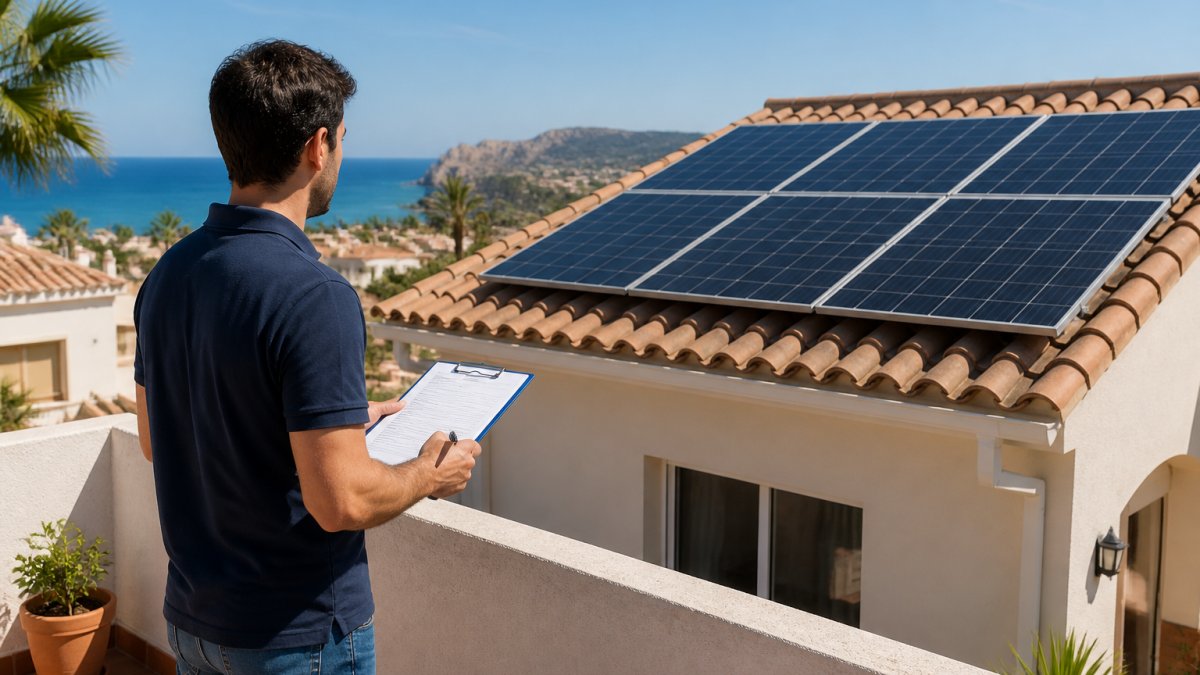
Start with the inverter. If it shows a fault light or the app shows a drop, write down the date. Next, look at the panels from ground level. You are checking for cracked glass, bird droppings, and shading from new growth.
Then look at the roof edges and gutters. Leaves and pine needles pile up there and block water drainage. If a storm has passed through, check for loose cable clips.
None of this takes more than ten minutes. Do it on the same day each month so it becomes a habit.
Annual tasks best handled by a professional
Some jobs are not worth doing yourself. A technician should check the mounting rails, torque the bolts, inspect DC cables for wear, and test each string's output against its expected figure.
They should also check the inverter's error log and confirm the system is still meeting the performance you were quoted. We build this into our post-commissioning support.
How Often to Clean Solar Panels on a Villa Roof
Cleaning frequency depends on where you live, not on a fixed calendar. Inland, twice a year is usually enough. On the coast, four times a year is more realistic.
Rain helps, but it is not a cleaning service. Light rain mixes with dust and leaves a film that dries onto the glass. Heavy rain clears more, but it still will not shift salt crust or sticky pollen.
Why coastal dust and salt change the schedule
Salt air leaves a thin residue that scatters light before it reaches the cells. Dust from nearby building work does the same. Both build up faster in summer, when you need output most.
If your villa sits within a few kilometres of the sea, treat cleaning as a seasonal task rather than an annual one. Spring, early summer, late summer and autumn is a sensible rhythm.
Check after any Sahara dust event too. That orange film is thick, and it does not wash off on its own.
Solar Inverter Monitoring: Catching Problems Early
Solar inverter monitoring is the practice of tracking your system's daily and monthly output so you spot a drop the week it happens. It is the single most useful maintenance habit a villa owner can build.
Most modern inverters log data to a phone app. Spend two minutes a week on it. You are looking for three things:
- A sudden drop on a clear day
- One string producing less than the others
- Error codes or repeated restarts
A gradual decline over weeks usually means dirt or shading. A sudden drop usually means a fault. Either way, you want to know before the next bill.
If your villa is empty for long stretches, remote monitoring is not optional. It is the only way you will know something has failed while you are away.
Solar Panel Cleaning Costs: What Villa Owners Should Expect
Cleaning costs depend on roof height, panel count, access and how much build-up there is. There is no single figure that fits every villa, and any company quoting one without seeing the roof is guessing.
What drives the price up:
- Steep or tiled roofs that need harness access
- Panels spread across more than one roof plane
- Heavy salt or dust build-up needing a second pass
- Pool areas where run-off needs care
What keeps it down is simple access, a single array, and regular cleaning so nothing is ever badly fouled. Booking a clean as part of an annual service usually works out better than paying for separate call-outs.
For a current figure, ask for a quote based on your actual roof. We price after a look at the array, not from a call centre script.
Common Mistakes That Damage Villa Solar Systems
The most common mistakes are not dramatic. They are small habits that quietly cut output or shorten the life of the system.
- Using a pressure washer. High pressure forces water past the frame seals and can crack cells.
- Cleaning in full sun. Water evaporates before it lifts the dirt, leaving streaks and spots.
- Using household detergent. It leaves a residue that attracts more dust.
- Ignoring the inverter. A failing inverter can sit for months without anyone checking.
- Letting trees grow. A neighbour's tree that was small at install can shade your array two years later.
- Skipping the annual check. Bolts loosen, clips perish, and cables rub against tiles.
Protecting Your Solar Investment When the Villa Is Empty
An empty villa is where maintenance plans usually fall apart. Nobody is there to notice a fault light, and nobody is there to clear a blocked gutter before the first autumn storm.
Three things protect the system while you are away:
- Remote monitoring switched on. You get an alert instead of a surprise.
- A scheduled annual service. Booked for a month you are actually here, or handled on your behalf.
- A local contact. Someone who can look at the roof after a storm without waiting for your next visit.
If you rent the villa out, brief your manager on the basics. They only need to know how to read the inverter display and who to call.
This is the part most owners underestimate. A system that runs unwatched for eight months can lose a full season of output before anyone notices.
A villa solar system is a long-term asset, and it rewards the owners who look after it. The routine is not complicated: a monthly glance at the inverter, a seasonal clean, and one proper annual service.
That is what MiSolar handles. We manage engineering, permitting, procurement and on-site works in-house, design each system around your actual consumption, and stay with you after commissioning with monitoring setup and performance checks. Our clients see bills fall towards zero and break even in as little as two to five years.
Get a quote from MiSolar and keep your system producing at the level it was designed for.
Frequently Asked Questions
How often should solar panels on a villa be cleaned?
In coastal areas with dust and salt in the air, most villa systems benefit from cleaning every two to three months. Inland properties with less airborne debris can stretch to twice a year. Rain alone rarely removes the sticky film that salt, pollen and dust leave behind, so a scheduled clean keeps output at its peak. Your installer can advise a schedule based on your roof pitch, surroundings and local conditions.
Can I clean solar panels myself, or should I hire a professional?
You can safely rinse panels with a garden hose from ground level if they are easily reachable. However, climbing onto a villa roof to scrub panels carries real fall risks, and using hard water or abrasive tools can scratch the glass or void warranties. A professional clean typically includes a full inspection of mounts, cabling and connectors, so many owners find it worthwhile for the safety and thoroughness alone.
How can I tell if my solar panels are underperforming?
Your inverter app or monitoring portal shows daily and monthly generation. If output drops noticeably on clear days, or if the system produces less than the same month last year, something is wrong. Common causes include dirt build-up, shading from new tree growth, a faulty inverter or a damaged panel. Solar inverter monitoring alerts you to these issues before they become expensive, which is why setting up alerts from day one matters.
Do solar panels need maintenance when a villa is unoccupied?
Yes, and unoccupied villas need more attention, not less. Dust, salt and bird droppings accumulate whether anyone is home or not. Without regular monitoring, a dropped string or inverter fault can go unnoticed for months, costing you generation and potentially voiding performance guarantees. Arrange periodic checks and remote monitoring so your system keeps producing and any fault is flagged quickly, even when you are away.