 Listicle
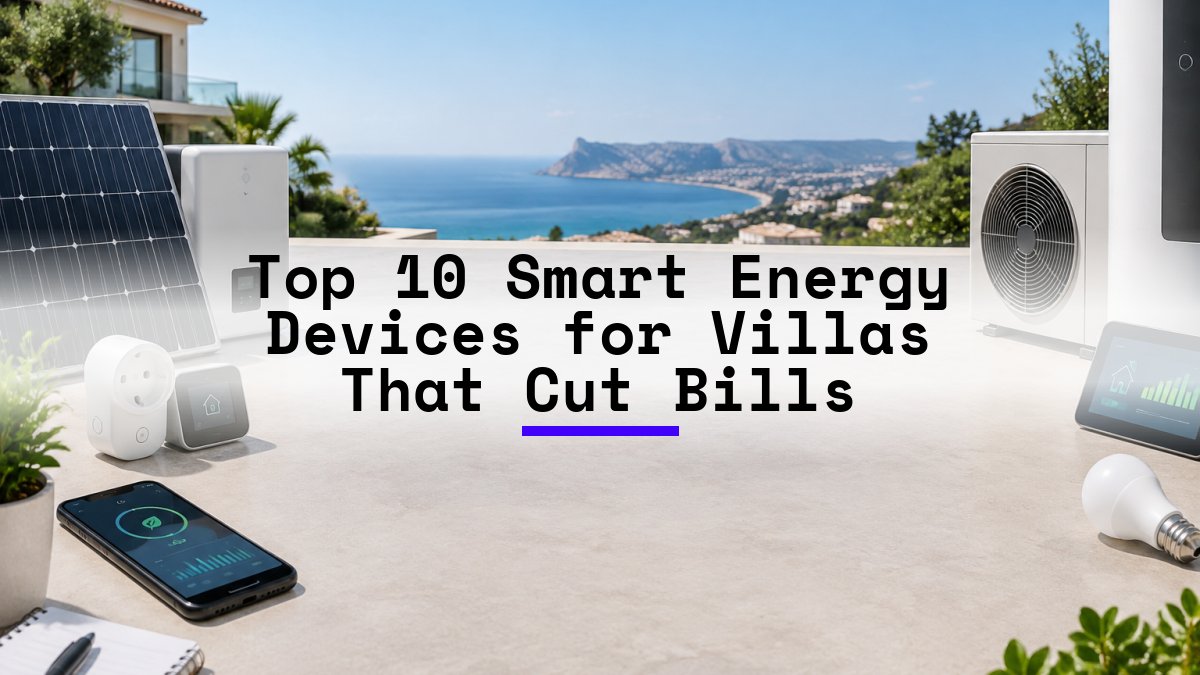
Top 10 Smart Energy Devices for Villas That Cut Bills
Last Updated: November 12, 2026
Quick Summary
The top smart energy devices for villas are meters, monitors and controllers that measure and manage how a home uses electricity, turning a single monthly bill into live data on circuits, appliances and solar generation. Compare options like MiSolar, Emporia Vue 3, Smappee and CURB by what they measure and where they fall short.
- A second home left empty for months can hide a faulty pool pump until the bill arrives.
- Emporia Vue 3 software and support are built around North American electrical conventions.
- Smappee reports energy use and cost by appliance and also tracks solar panels and EV charging.
- Sense device detection improves over weeks, not hours, and unusual loads may never be identified.
- A smart thermostat controls one system well and tells you nothing about the pool pump.
Table of Contents
- Why Smart Energy Devices Matter for Villa Owners
- Quick Comparison: Top 10 Smart Energy Devices for Villas
- 1. MiSolar: Full-Service Solar and Smart Energy Integration
- 2. Emporia Vue 3: Circuit-Level Electricity Monitoring
- 3. Smappee: Appliance-Level Energy Data and Solar Tracking
- 4. Siemens Inhab: A Smart Home Energy Management System
- 5. Sense: Real-Time Energy Monitoring and Device Detection
- 6. CURB: Whole-Home Energy Monitoring with Circuit-Level Detail
- 7. Meross 18-Circuit Smart Energy Monitor
- 8. Eyedro: Simple Energy Monitoring
- 9. IoTaWatt: Open-Source Energy Monitoring
- 10. Smart Thermostats and Heating Control
- Choosing the Right Device for a Jávea Villa
- Frequently Asked Questions
Why Smart Energy Devices Matter for Villa Owners
Smart energy devices are meters, monitors and controllers that measure and manage how a home uses electricity. They turn a single monthly bill into live data on circuits, appliances and solar generation.
That matters more in a villa than in an apartment. A second home left empty for months can hide a faulty pool pump or a running water heater until the bill arrives.
Below, we compare ten options by what they actually measure, where they fall short, and who should skip them. Monitoring paired with solar is a useful way to see consumption, and owners who review their data often change how they use electricity.
If you want the wider picture first, our guide to smart energy management for large villas covers whole-property strategy before individual devices.
Quick Comparison: Top 10 Smart Energy Devices for Villas
| Device | Type | Best For | Key Limitation |
|---|---|---|---|
| MiSolar | Full-service solar and monitoring | Owners wanting one provider | Requires a site survey |
| Emporia Vue 3 | Circuit-level monitor | DIY-minded owners | US-oriented ecosystem |
| Smappee | Appliance-level + solar tracking | Solar and EV households | Needs professional install |
| Siemens Inhab | Smart home energy management system | Brand-led smart homes | Limited Spain availability |
| Sense | Real-time device detection | Tech-comfortable owners | Detection takes time |
| CURB | Whole-home circuit detail | Detailed load analysis | Higher hardware cost |
| Meross 18-Circuit | Multi-circuit monitor | Budget multi-circuit tracking | Basic software |
| Eyedro | Energy monitoring | Simple single-point tracking | Limited model range |
| IoTaWatt | Open-source monitoring | Data hobbyists | Requires configuration |
| Smart thermostat | Heating and cooling control | Holiday-home owners | Controls one system only |
1. MiSolar: Full-Service Solar and Smart Energy Integration
MiSolar is a full-service option for this category. Engineering, permitting, procurement and on-site works are managed in-house, and monitoring can be set up after commissioning.
The advantage is not one clever gadget. Because system design depends on understanding how a villa uses energy and responds to its surroundings, Deposits back store can be considered alongside indoor conditions when shaping a more complete monitoring approach.
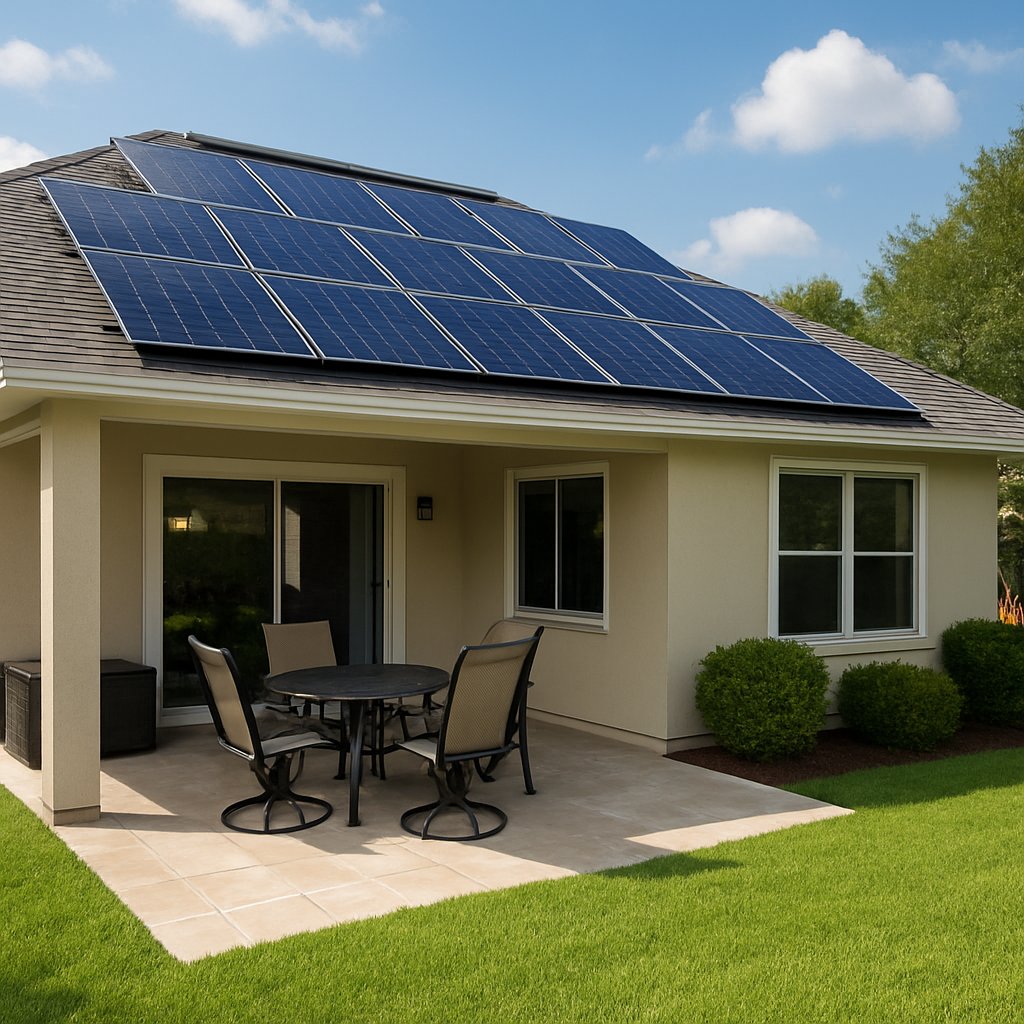
Homeowners with shaded roofs often ask whether solar will work for them. If you want the detail on battery storage and backup, see our solar battery storage and installation service; if you are ready to move, you can review residential solar installation.
Pros and Cons
Pros:
- One provider for engineering, permits, installation and monitoring
- Local knowledge of roof types and municipal requirements
- Post-installation monitoring setup and performance checks
- Financing plans available
Cons:
- Requires a site survey before any recommendation
- Not a plug-in gadget you install yourself
Best for: villa owners who want the whole system, not a dashboard.
Skip if: you only want a cheap monitor for a single appliance.
2. Emporia Vue 3: Circuit-Level Electricity Monitoring
Emporia Vue 3 is a circuit-level electricity monitor that can show which circuits carry the load. For a villa with a pool pump, air conditioning and an electric water heater, that breakdown is where the savings hide.
The catch is ecosystem fit. Emporia's software and support are built around North American electrical conventions, so check compatibility with your Spanish distribution board before ordering. EnergySage's home energy monitor comparison lists it among current options.
Pros and Cons
Pros:
- Circuit-level detail rather than one whole-home figure
- Useful for isolating pool and climate loads
- Widely reviewed and documented
Cons:
- Installation inside a live consumer unit needs an electrician
- Software assumptions may not match Spanish tariffs
Best for: owners who want data per circuit and will hire an installer.
3. Smappee: Appliance-Level Energy Data and Solar Tracking
Smappee reports energy use and cost by appliance and also tracks solar panels and electric vehicle charging, according to SaveOnEnergy's review of energy monitors. That combination suits a villa running self-consumption solar with an EV charger.
What most guides miss is that appliance-level insight is only useful if the software understands your tariff. A monitor that reports cost using a flat rate will mislead you on a Spanish time-of-use contract. Verify that before you buy.
Pros and Cons
Pros:
- Appliance-level reporting
- Explicit solar and EV coverage
- Water monitoring in some configurations
Cons:
- Professional installation recommended
- Spanish availability and pricing need checking
Best for: solar and EV households wanting appliance detail.
4. Siemens Inhab: A Smart Home Energy Management System
Siemens Inhab is positioned as a smart home energy management system rather than a simple monitor.
The honest limitation: availability and support in Spain are not guaranteed, and a branded platform locks you into its ecosystem. If you are comparing platforms properly, read our breakdown of the best home energy management software before committing.
Pros and Cons
Pros:
- Brand-name hardware and support structure
- Fits a wider building automation plan
- Positioned as a management system, not just a meter
Cons:
- Limited verified information on Spanish availability
- Ecosystem lock-in
Best for: owners building a full smart-home platform.
5. Sense: Real-Time Energy Monitoring and Device Detection
Some monitors use real-time data and pattern recognition to identify individual devices from their electrical signatures.
The caveat is patience. Device detection improves over weeks, not hours, and unusual loads may never be identified. Solar.com's energy monitor comparison places Sense alongside Smappee and CURB.
Pros and Cons
Pros:
- Real-time consumption view
- Automatic device detection over time
- Clean mobile app
Cons:
- Detection is slow and imperfect
- Fewer hard numbers per circuit than clamp-based monitors
Best for: tech-comfortable owners who enjoy the app.
6. CURB: Whole-Home Energy Monitoring with Circuit-Level Detail
CURB is a whole-home monitor with circuit-level detail, which suits analysis across many circuits. For a large villa with many circuits, that granularity is the point.
It costs more than basic monitors, and installation is a job for an electrician working inside the consumer unit. If your goal is simply to see the monthly total, this is more instrument than you need.
Pros and Cons
Pros:
- Circuit-level detail across the whole property
- Good for identifying phantom loads
- Suits large floor plans
Cons:
- Higher hardware cost
- Professional installation required
Best for: owners who want deep load analysis.
7. Meross 18-Circuit Smart Energy Monitor
Meross offers an 18-circuit smart energy monitor, which covers a lot of a villa's distribution board for a modest outlay. The trade-off is software depth: reporting is functional rather than analytical.
For a holiday-home owner who wants to spot a running pump remotely, that may be enough. For anyone planning battery sizing or tariff optimisation, it is not.
Pros and Cons
Pros:
- Many monitored circuits
- Accessible entry point
- Remote viewing via app
Cons:
- Basic reporting
- Compatibility with Spanish boards needs checking
Best for: budget-conscious multi-circuit tracking.
8. Eyedro: Simple Energy Monitoring
Eyedro appears in energy-monitor device roundups as a straightforward monitoring option. It suits owners who want consumption data without a complex setup.
The supplied information does not identify a specific model or confirm Spanish availability, so treat it as a name to research rather than a settled recommendation.
Pros and Cons
Pros:
- Simple monitoring focus
- Lower complexity than platform systems
Cons:
- Unverified model range
- Limited detail on tariffs and solar
Best for: simple single-point tracking.
9. IoTaWatt: Open-Source Energy Monitoring
IoTaWatt is an open-source energy monitor named alongside Emporia Vue and Sense in home energy monitor comparisons. It appeals to owners who want raw data and full control.
That control comes at a cost: configuration is manual, and you need to be comfortable with technical setup. Many villa owners want insight without a complicated project.
Pros and Cons
Pros:
- Open-source and highly configurable
- Detailed data access
Cons:
- Manual setup
- No hand-holding support
Best for: data hobbyists.
10. Smart Thermostats and Heating Control
A smart thermostat for villas controls the single biggest seasonal load: heating and cooling. Paired with a heat pump, it schedules climate control around occupancy, which matters enormously for a home used three months a year.
On its own, it is not an energy monitor. It manages one system well and tells you nothing about the pool pump. IDAE, Spain's energy agency publishes guidance on household efficiency that is worth reading alongside any purchase.
Pros and Cons
Pros:
- Direct control of heating and cooling
- Strong fit for holiday occupancy patterns
- Remote adjustment before arrival
Cons:
- Covers one system only
- Savings depend on the installed system
Best for: owners with a heat pump or zoned air conditioning.
Choosing the Right Device for a Jávea Villa
The right choice depends on your goal. If you want to understand consumption, start with a circuit-level monitor.
Coastal climate adds a factor: salt air and humidity punish cheap hardware and exposed wiring, so specify equipment rated for the environment and have it installed properly.
That is why we rarely recommend a device in isolation. Solar and battery sizing can be based on consumption data, with monitoring set up afterwards.
If you already have panels, our guide to optimising solar energy consumption at home shows how to use that data.
Most villa owners start with a monitor and end up wanting the bill gone entirely. That is the point where a survey beats a gadget.
Frequently Asked Questions
What smart devices can reduce energy use in a villa?
Smart energy devices for villas fall into four main groups: home energy monitors that track electricity usage in real time, smart thermostats that control heating and cooling, smart lighting and plugs that automate consumption, and solar battery monitoring systems that show how much self-consumption you are achieving. A home energy monitor is usually the best starting point because it reveals which circuits and appliances drive your bills, so you can target the devices that will make the biggest difference.
Which smart energy devices work best with solar panels?
A home energy monitor for solar panels is the most useful first addition because it shows generation, consumption and export in one place. Pair it with a solar battery monitoring system if you have storage, so you can see when to run high-load appliances like the pool pump or EV charger. Smart thermostats also work well with solar, letting you pre-cool or pre-heat the villa during peak generation hours instead of drawing from the grid in the evening.
What is the difference between a smart meter and a home energy monitor?
A smart meter is installed by your electricity supplier and records total consumption for billing, with readings sent remotely. A home energy monitor is a separate device you install inside your property, usually with clamps on individual circuits, and it gives you circuit-level and appliance-level detail in real time. For villa owners, the monitor is the tool that actually changes behaviour because it shows exactly where electricity is being used, while the smart meter only shows the total.
Are smart thermostats useful in a villa in Jávea?
Yes, particularly for holiday homes that sit empty for weeks. A smart thermostat for villas lets you control heating and air conditioning remotely, set schedules around occupancy, and avoid cooling an empty house. In the coastal climate, humidity control matters as much as temperature, so choose a model that supports dehumidification scheduling. Remote monitoring also alerts you to unexpected consumption, which can indicate a fault before it becomes a large bill.
How can I monitor electricity use in a holiday home remotely?
Install a Wi-Fi-connected home energy monitor that reports to a cloud app, then check it from anywhere. Look for a model with circuit-level monitoring so you can see whether the pool pump, air conditioning or water heater is running when it should not be. Set alerts for abnormal consumption, and if you have solar, choose a monitor that combines generation and usage data. MiSolar offers post-commissioning support including monitoring setup and performance checks.