
 listicle
Best Solar Battery Storage Systems: 2026 Comparison
Table of Contents
- Quick Comparison: Best Solar Battery Storage Systems
- Tesla Powerwall 3: The Integrated Benchmark
- Huawei LUNA2000: Modular Safety and Scalability
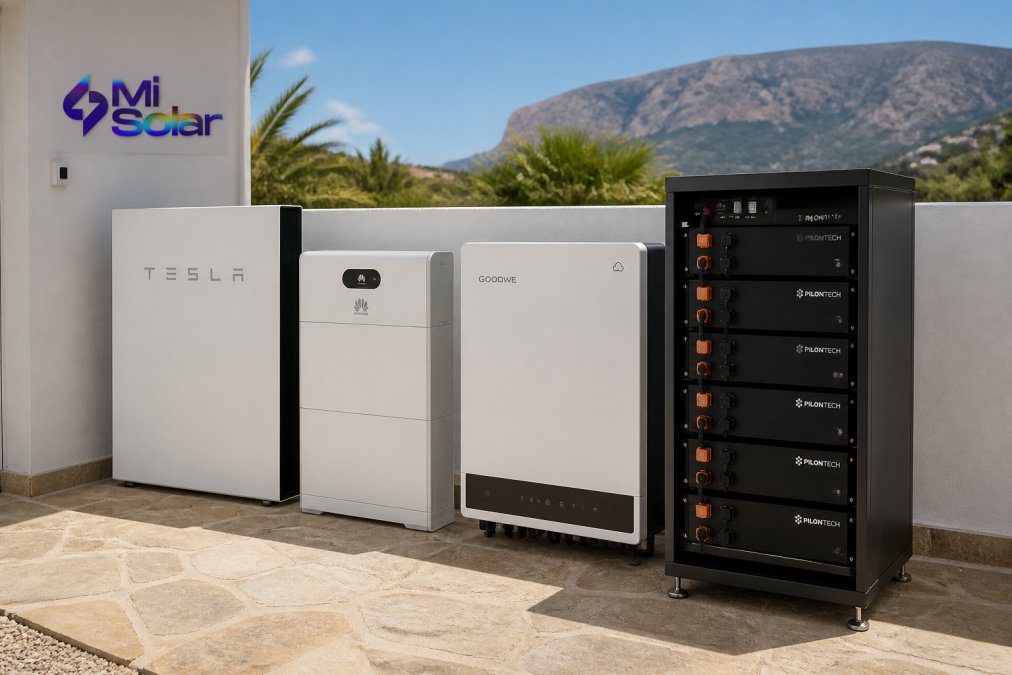
- GoodWe Lynx Home F and Pylontech Force H2: Compact and Cost-Effective Alternatives
- Solar Battery Capacity Explained: Sizing Your System Correctly
- The Cost of Solar Battery Installation and What Drives It
- How to Choose the Right Battery for Your Home
- Frequently Asked Questions
Last Updated: September 20, 2026
Quick Comparison: Best Solar Battery Storage Systems
The best solar battery storage systems in 2026 are Tesla Powerwall 3, Huawei LUNA2000, GoodWe Lynx Home F, Pylontech Force H2, SolarEdge Home Battery, Enphase IQ Battery 5P, FranklinWH aPower 2, MidNite Solar Powerflo 16, and Anker SOLIX. Each suits a different home, roof and budget.
This guide from MiSolar covers what separates them, how solar battery storage works in practice, and which unit fits your consumption. We have completed over 300 installations across the region, so we know how these systems behave after the first summer, not just on the spec sheet.
| System | Capacity | Chemistry | Best For |
|---|---|---|---|
| Tesla Powerwall 3 | 13.5 kWh | NMC | Premium all-in-one |
| Huawei LUNA2000 | 5-30 kWh | LFP | Scalable households |
| GoodWe Lynx Home F | Stackable | LFP | Compact indoor installs |
| Pylontech Force H2 | Flexible | LFP | Budget modular builds |
| SolarEdge Home Battery | Scalable | NMC | Existing SolarEdge owners |
Tesla Powerwall 3: The Integrated Benchmark
Tesla Powerwall 3 is the benchmark for integrated home storage, combining a 13.5 kWh battery with a built-in solar inverter in one unit. That integration simplifies installation and cuts the number of separate components on your wall.
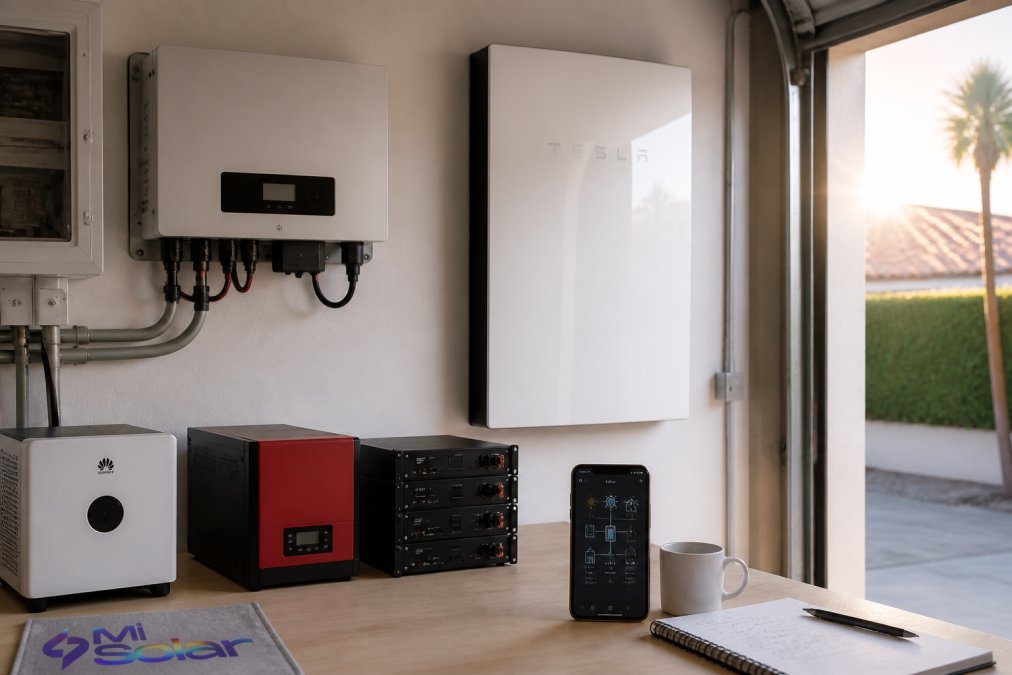
The Powerwall 3 runs heavy appliances without strain and switches to backup almost instantly during an outage. Monitoring happens through the Tesla app, which remains the cleanest interface in the category. The trade-off is price: it costs more than modular alternatives, and you are tied to Tesla's ecosystem for service and software.
Huawei LUNA2000: Modular Safety and Scalability
Huawei LUNA2000 is a modular lithium iron phosphate battery that scales from 5 kWh to 30 kWh, so you can start small and add capacity later. The LFP chemistry gives it a strong thermal safety profile, which matters for indoor installations.
It works with single-phase and three-phase inverters and discharges deeply, meaning you use more of the stored energy rather than leaving it locked away. The catch: it pairs best with Huawei inverters, so it is not the right pick if you already run another brand.
GoodWe Lynx Home F and Pylontech Force H2: Compact and Cost-Effective Alternatives
GoodWe Lynx Home F and Pylontech Force H2 are the compact, cost-effective options for homeowners who want solid performance without premium pricing. Both use stackable, high-voltage designs that save wall space.
The Lynx Home F suits modern homes with its slim cabinet and automatic recovery from deep discharge. Pylontech Force H2 wins on durability and price, with a vertical stack that is easy to install. Its one drawback is that the battery management system needs careful configuration, so installer experience matters more here than with plug-and-play units.
Solar Battery Capacity Explained: Sizing Your System Correctly
Solar battery capacity is the amount of energy a battery can store and deliver, measured in kilowatt-hours (kWh). A 10 kWh battery can run a typical household's evening load, while a 5 kWh unit covers only essentials.
Sizing depends on three things: your daily consumption, how much you run at night, and whether you want backup during outages. A common mistake is buying the largest battery available. Oversizing wastes money; undersizing leaves you drawing from the grid at peak rates.
The Cost of Solar Battery Installation and What Drives It
The cost of solar battery installation depends on capacity, battery chemistry, inverter compatibility and the complexity of your wiring. There is no single figure, because two homes on the same street can need very different setups.
What drives the price up: larger capacity, three-phase conversion, longer cable runs, and structural work to mount a heavy unit. What keeps it down: choosing a battery that matches your existing inverter and a straightforward indoor location.
At MiSolar, we quote after a site survey, so the number reflects your roof, your consumption and your goals. Pricing depends on the system you choose, and we provide a full breakdown before any work starts.
How to Choose the Right Battery for Your Home
Choosing the right battery comes down to four checks: capacity against your consumption, compatibility with your inverter, physical space, and how much backup you want. Run through them in order.
- Match capacity to your nightly consumption, not the biggest number on the box
- Confirm the battery works with your existing or planned inverter
- Measure the mounting space, including clearance for airflow
- Decide whether you need whole-home backup or essentials only
- Ask about warranty length and what it actually covers
- Confirm who handles monitoring and service after commissioning
If you want a system designed around your lifestyle rather than a catalogue default, MiSolar manages the engineering, permits and installation in-house, alongside Residential Solar Installation and Solar PV Installation Services and EV charger installation for those looking to pair storage with generation and charging. We also handle the requirements set out in Spain's building and electrical regulations so nothing is left to chance.
Frequently Asked Questions
Is the Tesla Powerwall compatible with all solar inverters?
No. The Tesla Powerwall 3 has an integrated solar inverter, so it replaces your existing inverter rather than working alongside it. This simplifies installation for new systems but means it is not a direct add-on for homes with an existing non-Tesla inverter. If you already have a separate inverter, an AC-coupled battery such as the FranklinWH aPower 2 or Enphase IQ Battery 5P is a more straightforward option. Your installer can confirm compatibility before you commit.
How long do modern solar battery storage systems typically last?
Most lithium iron phosphate (LFP) batteries, including the Huawei LUNA2000 and Pylontech Force H2, are designed for 6,000 or more charge cycles, which translates to roughly 10 to 15 years of daily use. Warranties vary: the Enphase IQ Battery 5P offers a 15-year limited warranty, while others typically cover 10 years. Capacity fades gradually over time, so a system rated at 10 kWh when new may deliver around 80% of that after a decade.
What is the difference between AC-coupled and DC-coupled battery systems?
DC-coupled batteries, such as the SolarEdge Home Battery, connect on the direct current side of your solar inverter, which reduces energy lost during conversion and suits new installations. AC-coupled batteries, such as the FranklinWH aPower 2, connect on the alternating current side and are easier to retrofit to an existing solar array. The right choice depends on whether you are building a system from scratch or adding storage to panels you already have.
Do I need a battery storage system to benefit from solar energy?
No, but a battery changes how much of your own solar power you actually use. Without storage, surplus electricity flows to the grid and you draw from it again in the evening. A battery lets you store that surplus and use it after sunset, which increases self-consumption and reduces reliance on the grid. For holiday homes that sit empty for months, the maths is different and worth discussing with an installer before you buy.
Which solar battery offers the best value for money?
Value depends on your consumption pattern, roof space and whether you need whole-home backup. The Pylontech Force H2 is generally the most cost-effective per kilowatt-hour for straightforward storage, while the Huawei LUNA2000 offers strong modularity for households that plan to expand. Premium integrated systems like the Tesla Powerwall 3 cost more but include an inverter and refined software. Compare total installed cost, not just the battery unit price.
High electricity bills and grid dependence are solvable problems, and the right battery is the centre of that solution. MiSolar designs, permits and installs tailored solar and storage systems, with financing plans available and post-commissioning monitoring to keep performance on track. Get started with MiSolar and take control of your energy costs.