 blog
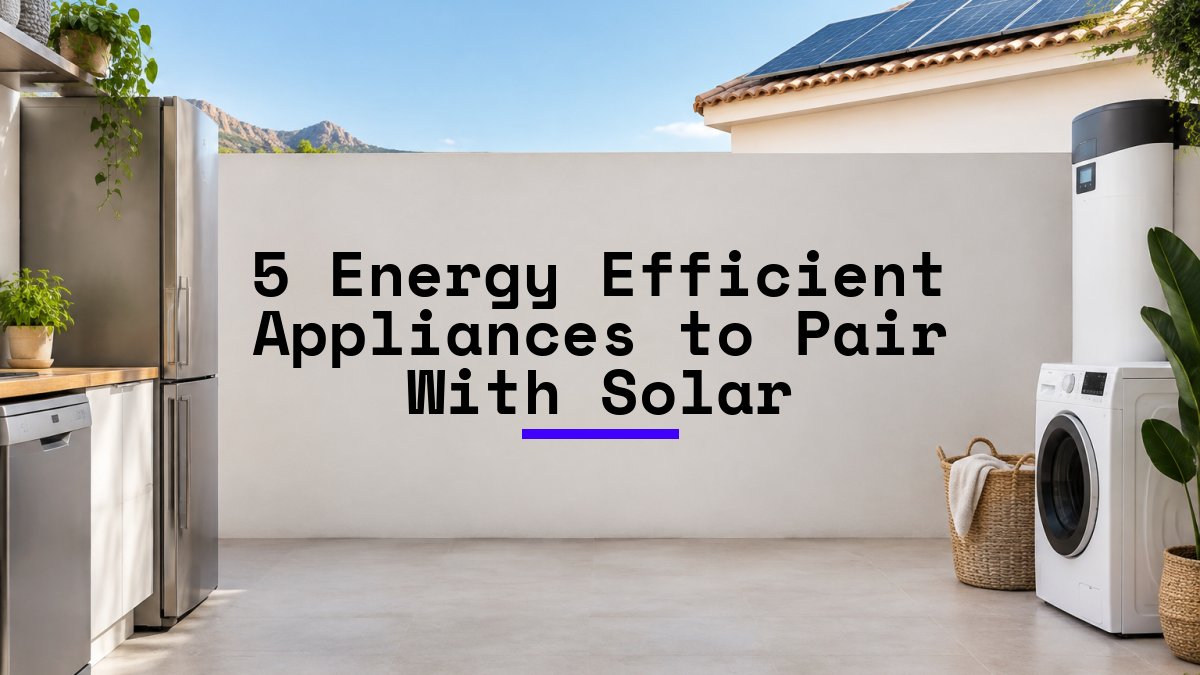
5 Energy Efficient Appliances to Pair With Solar
Last Updated: November 20, 2026
Quick Summary
The top 5 energy efficient appliances to pair with solar are heat pumps, air conditioning, refrigerators, washing machines and dishwashers, and induction cooktops and electric ovens. Heat pumps deliver the highest overall efficiency, while fridges cut your constant baseline load and washers, dishwashers and ovens can be shifted into daylight hours.
- Since the 2021 rescale, EU energy labels grade appliances from A to G, retiring the old A+ and A+++ classes.
- A heat pump draws more power in winter, when Costa Blanca North solar generation is at its lowest.
- Air conditioning loads align almost perfectly with peak summer solar production, so run cooling during sunniest hours.
- A fridge runs 24/7, making an A-rated model the most important choice in that category.
- Running a heat-pump dryer and dishwasher together on a small inverter can trip the supply, so stagger starts.
Table of Contents
- Why Energy Efficient Appliances Matter With Solar
- How to Read EU Energy Labels Before You Buy
- 1. Heat Pumps: Can a Heat Pump Run on Solar Power?
- 2. Solar Panels and Air Conditioning: Cooling Without the Bill Shock
- 3. Refrigerators, Washing Machines and Dishwashers
- 4. Induction Cooktops and Electric Ovens
- Quick Comparison: What Each Appliance Delivers
- Getting the Sizing Right in Jávea
- Frequently Asked Questions
Why Energy Efficient Appliances Matter With Solar
The appliances you choose determine how much of your solar generation you actually use. Solar panels rarely save you money on their own; the savings come from what those panels power.
A solar system produces a fixed amount of energy, and every kilowatt-hour you consume at home instead of buying from the grid is one you did not pay for. Efficient appliances shrink the consumption side, so more generation goes toward useful work rather than waste heat.
This guide covers the top 5 energy efficient appliances to pair with solar, ranked by how much they change your household energy profile. We explain how to read EU energy labels, how each appliance interacts with solar production, and how to schedule loads so your panels do the heavy lifting.
How to Read EU Energy Labels Before You Buy
EU energy labels are the fastest way to compare appliances. Since the 2021 rescale, appliances are graded from A to G, and the old A+, A++ and A+++ classes were retired.
Two numbers matter most. The annual energy consumption figure, in kWh per year, tells you what the appliance uses over a standard test cycle. The energy efficiency class tells you where that sits relative to the market. An A-rated fridge in 2026 uses markedly less than a D-rated model of the same size, and that gap compounds over a decade.
Watch out: a low purchase price on a D-rated appliance often costs more over its life than a higher-priced A-rated model. Run the maths on annual kWh before you decide.
1. Heat Pumps: Can a Heat Pump Run on Solar Power?
Yes, a heat pump can run on solar power, and for a home in Jávea or elsewhere on the Costa Blanca North it is usually the single highest-impact appliance swap you can make. A heat pump moves heat rather than generating it, so it delivers several units of heat for every unit of electricity it consumes. That efficiency is exactly what a solar system wants: a large, steady load that can run during daylight.
What the EU Label Tells You About a Heat Pump
Heat pumps sold in Spain carry an EU energy label. For an air-to-water heat pump, the label reports a seasonal coefficient of performance (SCOP) and an annual energy consumption in kWh for a stated heating demand. Read the annual kWh figure, not just the letter: two A-rated units of different output can differ by hundreds of kWh per year.
For a typical Jávea villa with year-round occupancy, domestic hot water is often the larger and steadier load than space heating, because winters are mild and summers are long. A solar-powered hot water cylinder lets you heat water when the panels are producing and store it for the evening, and pairing it with a heat pump gives you flexibility across the seasons. Explore our air source heat pump installation or read the guide to air source heat pumps in Costa Blanca.
The Winter Timing Problem
Here is a trade-off to plan for. A heat pump draws more power in winter, when solar generation on the Costa Blanca North is at its lowest; summer output is abundant, December and January output is not. A heat pump sized purely against summer generation will pull from the grid in the coldest weeks.
Watch out: sizing a heat pump against summer generation alone leaves you buying grid electricity all winter, which erodes the savings you expected.
Best for: villas with year-round occupancy and space for an outdoor unit. Skip if: the property sits empty for most of the year and hot water demand is minimal.
2. Solar Panels and Air Conditioning: Cooling Without the Bill Shock
Solar panels and air conditioning are a natural pairing in this climate. Cooling demand peaks in summer, and summer is precisely when your panels produce the most. Unlike heating, air conditioning loads align almost perfectly with peak solar production.
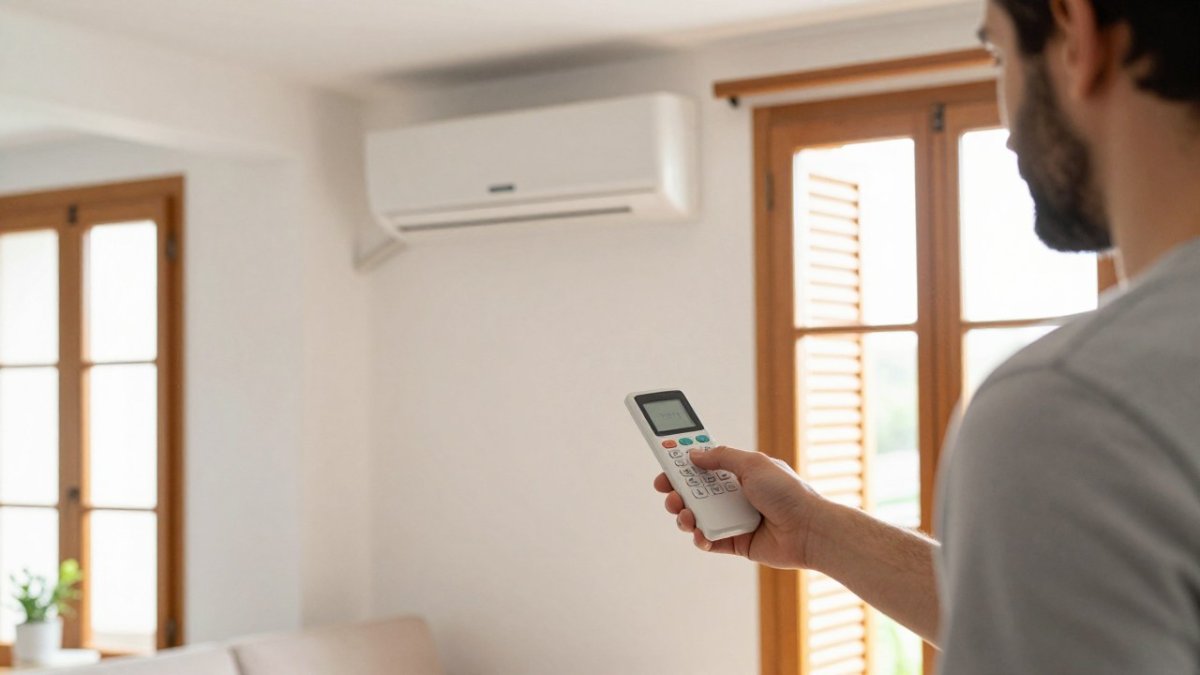
The trick is scheduling. See our solar-powered air conditioning guide, or book a high-efficiency air conditioning installation in Jávea & Costa Blanca North.
Best for: homes with heavy summer cooling demand. Skip if: you rarely use cooling and rely on natural ventilation.
3. Refrigerators, Washing Machines and Dishwashers
These three appliances behave very differently on a solar system, and treating them as one category is where most guides lose the plot. A fridge is a constant load you cannot move; a washer and a dishwasher are flexible loads you can schedule into the sunniest hours.
Refrigerators: The 24/7 Baseline
A fridge runs around the clock, so its efficiency matters more than any other appliance. It is the one load you cannot shift to daylight hours, which makes choosing an A-rated model the single most important decision in this category. That gap runs every hour of every day, including the winter months when your panels produce least. Read the annual kWh figure rather than the letter alone, and check it against the capacity you actually need, an oversized A-rated fridge can still use more than a right-sized B-rated one.
Washing Machines and Dishwashers: Flexible Loads
Washing machines and dishwashers are the opposite: flexible loads you can schedule. Run them during peak solar production and you consume your own generation instead of exporting it at the low export rate. Cold-water washing and eco cycles can cut consumption further. In a Jávea home with a south-facing array, mid-morning to early afternoon is the window to target; with a battery, you can push the start later and still run on stored solar.
Heat-Pump Dryers and Cold-Water Washing
Combined with cold-water washing, it turns laundry from a heavy load into a manageable one. Set both to run mid-morning when generation is climbing, and use the delay-start timer so the cycle finishes before afternoon output begins to fall.
Watch out: running a heat-pump dryer and a dishwasher at the same time on a small inverter can trip the supply; stagger the starts or check your inverter capacity first.
Best for: every household, since the fridge runs 24/7. Skip if: you already own a recent A-rated fridge and a heat-pump dryer.
4. Induction Cooktops and Electric Ovens
An electric oven is a heavier load, but it is also a flexible one: bake during daylight and you cook on your own generation.
The practical rule is to cook when the sun is out. For evening cooking, a home battery or a slightly larger array covers the gap. LED lighting and efficient televisions round out the low-draw end of the home.
Best for: households replacing gas hobs or planning a kitchen renovation. Skip if: you cook mainly in the evening and have no battery storage.
Quick Comparison: What Each Appliance Delivers
| Appliance | Load Type | Best Time to Run | Main Benefit |
|---|---|---|---|
| Heat pump | Seasonal, heavy | Daytime, winter | Highest overall efficiency |
| Air conditioning | Seasonal, heavy | Peak sun hours | Aligns with summer output |
| Refrigerator | Constant, light | Runs 24/7 | Efficiency cuts baseline use |
| Washer / dishwasher | Flexible | Midday | Easy load shifting |
| Induction hob / oven | Flexible | Daylight | Efficient cooking on surplus |
Getting the Sizing Right in Jávea
Appliance choices only pay off if the system is sized to match. Sizing the inverter up lets a home add panels or a battery later without replacing the whole system.
Local conditions matter too. Roof orientation, shading from neighbouring trees, and the split between east and west facing panels all affect how much generation you have to work with.
If you are weighing up a system for a home near you, the first step is understanding your own consumption. Start with a residential solar installation assessment and build the appliance plan around it.
The gap between an average solar home and an excellent one usually comes down to the appliances behind the meter.
Frequently Asked Questions
Which appliances use the most electricity in a Spanish home?
Air conditioning and heating usually top the list, followed by hot water, refrigeration and laundry. A heat pump or air-source heat pump running in summer can draw more than any other single load. Checking the annual energy consumption figure on each appliance's EU energy label, given in kilowatt-hours, lets you compare real daily energy use before you buy.
Can a heat pump run on solar power?
Yes. A heat pump runs on electricity, so solar panels can supply it directly during daylight or through a home battery after dark. Because a heat pump moves heat rather than generating it, it delivers several kilowatts of heating or hot water for each kilowatt of power demand, which makes it one of the best matches for a solar-powered home.
Do I need a battery to run household appliances on solar power?
Not strictly. You can run appliances during daylight and use solar self-consumption directly, which is the cheapest option per kilowatt-hour. A home battery for solar appliances helps when you want to cook or cool after sunset without drawing from the grid.
Is a heat pump more efficient than an electric boiler?
Yes, by a wide margin. An electric boiler turns electricity directly into heat, while an air-source heat pump moves heat and so uses less electricity for the same output. For hot water and heating, that difference shows up directly in operating costs and in how much of your solar generation the system can absorb. Check the energy rating on the label and ask for a load calculation before deciding.