
 comparison
Solmates vs Sunrise Energy: Solar Comparison
Table of Contents
- Solmates vs Sunrise Energy: Quick Comparison
- How Installation Processes Differ
- Solar System Performance Guarantees Explained
- Residential Solar Installation Cost Breakdown
- Solar Inverter Compatibility and Performance
- Long-Term Support and Maintenance
- Which Provider Suits Your Needs?
- Frequently Asked Questions
Last Updated: October 4, 2026
Solmates vs Sunrise Energy: Quick Comparison
When comparing solar providers, the differences often lie in how they handle installation, performance guarantees, and long-term support. This solar comparison guide breaks down Solmates and Sunrise Energy side by side so you can see exactly where each excels and where it falls short.
At MiSolar, we've worked across the Costa Blanca North region long enough to understand what homeowners actually need: transparent pricing, reliable installation, and genuine support after the system goes live.
The key tension in this solar comparison is simple: lower upfront cost versus comprehensive service. Sunrise Energy tends to compete on price. Solmates positions itself as a full-service provider. Neither approach is inherently better, it depends on what matters most to you.
| Feature | Solmates | Sunrise Energy | Winner |
|---|---|---|---|
| Installation approach | In-house team | Subcontracted installers | Solmates |
| Performance guarantees | 25-year power warranty | 20-year standard warranty | Solmates |
| System monitoring | Included post-commissioning | Basic setup only | Solmates |
| Permitting support | Full handling in-house | Partial guidance | Solmates |
| Financing options | Multiple plans available | Standard bank loans | Solmates |
| Local expertise | Mediterranean-specific designs | General approach | Solmates |
How Installation Processes Differ
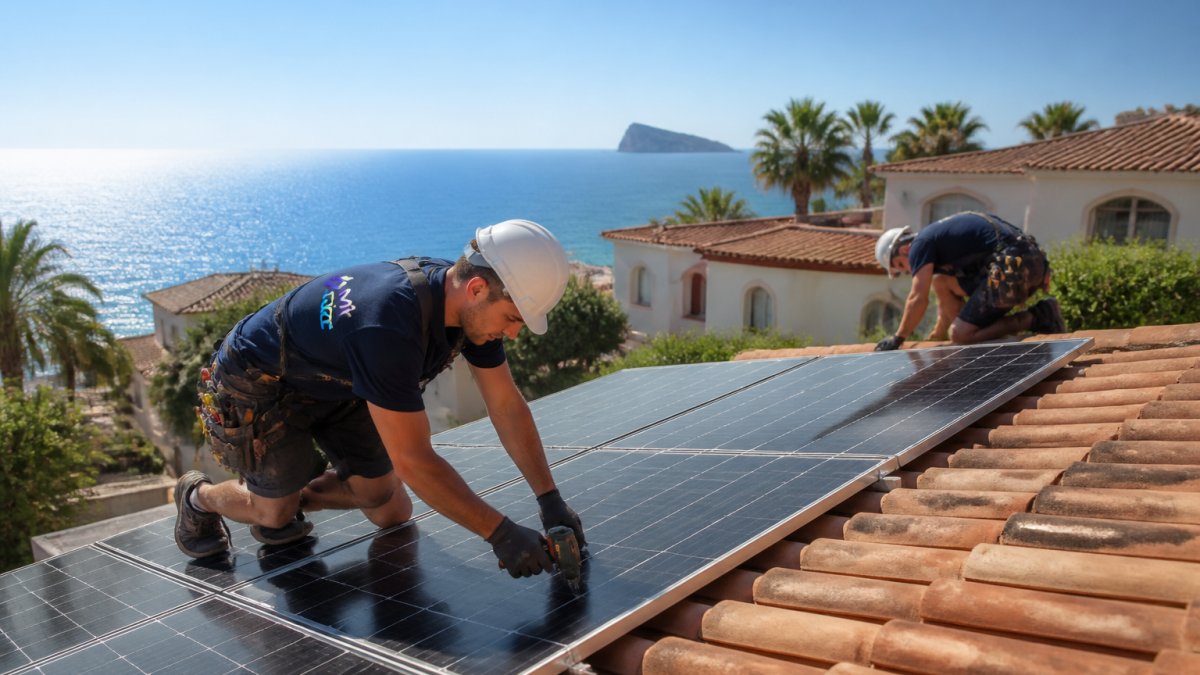
The installation process is where providers can diverge most noticeably.
What does this mean in practice? If something goes wrong mid-installation, dealing directly with the company that designed the system can be beneficial.
Local expertise matters for a region with as much variation in roof pitch, shading, and local regulations as this area has.
The installation timeline can also differ between providers.
Solar System Performance Guarantees Explained
This is where the contracts really matter. Both providers offer warranties, but the coverage differs significantly.
Here's what matters: if your system underperforms, you need proof. Included monitoring can give you that data automatically.
The performance guarantee also depends on the inverter and battery system (if installed).
Residential Solar Installation Cost Breakdown
Cost is the question every homeowner asks first, and for good reason. However, the initial price tag doesn't tell the whole story.
Beyond solar panels, we can integrate complementary services like EV charger installation or solar pool heater systems, which can enhance your overall energy efficiency and add value to your home.
Some providers may undercut on initial cost by using subcontracted installers and a more standardised design process. Their financing is typically through standard bank loans, which can be straightforward but less flexible.
The real comparison isn't the sticker price, it's the cost per kilowatt-hour of energy produced over 25 years. Better performance guarantees, included monitoring, and local optimisation often mean higher energy output from the same roof space. That translates to faster payback and greater lifetime savings.
For a typical villa installation, the difference in upfront cost can vary. However, a system that produces more energy over its lifetime can lead to thousands of euros in additional savings.
Financing terms matter too. Flexible plans can mean you can structure payments around your actual energy savings.
Solar Inverter Compatibility and Performance
The inverter is the brain of your solar system, it converts DC power from the panels into AC power your home uses. This component has a massive impact on overall performance.
Microinverters optimise each panel individually, which means one shaded panel doesn't drag down your entire system. String inverters are simpler and cheaper but less resilient to partial shading.
Some providers use a wider range of inverter brands, sometimes including lower-cost options that save money upfront but offer less sophisticated monitoring and optimisation.
The compatibility question matters if you're adding battery storage later. Some setups integrate seamlessly with specific battery systems, offering plug-and-play integration with no additional engineering required.
With some providers, battery compatibility depends on which inverter they installed. Some combinations work well; others may require expensive retrofit work to add storage later.
Performance-wise, microinverters can produce 3-5% more energy than string inverters in real-world conditions because they handle shading and temperature variation better. That might not sound like much, but over 25 years it compounds significantly.
Long-Term Support and Maintenance
This is the section that separates companies that disappear after installation from those that stay invested in your system's success.
System monitoring is critical for long-term performance. A well-monitored system catches problems early, a failing inverter, a loose connection, degraded panels, before they cost you serious energy output. Included monitoring can mean you have professional eyes on your system continuously.
Maintenance itself is minimal for both systems. Solar panels need occasional cleaning and inverters rarely fail. But when they do, you want a provider who responds quickly. A local presence and in-house team can mean faster service calls.
Which Provider Suits Your Needs?
Choose Solmates if you want comprehensive service from a single company. You're paying for peace of mind: in-house engineering, local expertise, detailed monitoring, and responsive support. This makes sense if you value reliability and want to minimise headaches over the system's 25-year life.
Choose Sunrise Energy if your primary concern is keeping upfront costs as low as possible and you're comfortable managing a more standardised installation process. You're accepting some trade-offs in monitoring detail and long-term support, but you'll save money initially.
For most homeowners in the Costa Blanca North region, a full-service model often pays for itself through better performance, faster problem resolution, and the confidence that one company stands behind every aspect of your system. However, if you're budget-constrained and willing to manage monitoring yourself, other options may be available.
The real question isn't which provider is objectively better, it's which approach aligns with your priorities and risk tolerance.
At MiSolar, we specialise in exactly this kind of decision-making. We've installed over 300 systems across the region and seen firsthand how installation quality, local expertise, and ongoing support determine whether a solar investment truly pays off. Our residential solar installation and solar PV installation services are tailored to the unique requirements of Costa Blanca North properties, and we also offer complementary services including air conditioning installation in Jávea & Costa Blanca North to help you maximise your home's energy efficiency. If you're evaluating providers and want a second opinion based on your specific roof, shading, and energy needs, get a quote and we'll walk you through the numbers. We'll show you what a system tailored to your home could actually generate, and what genuine long-term support looks like.
Frequently Asked Questions
What should I look for in a solar installation warranty?
A comprehensive solar warranty should cover product defects (typically 25 years), workmanship (10-15 years), and performance guarantees ensuring your system generates at least 80-85% of rated capacity after 25 years. Verify that the provider remains operational to honour claims, and check whether monitoring and maintenance are included. Local providers familiar with regional conditions often offer stronger post-commissioning support than distant installers.
How does solar system performance differ in Mediterranean climates?
Mediterranean regions benefit from high annual sunshine hours but face challenges including intense summer heat, which reduces panel efficiency, and occasional coastal salt spray affecting durability. High-efficiency panels with better temperature coefficients perform better in heat. Proper ventilation behind panels and corrosion-resistant components are essential. Local installers understand optimal orientations and seasonal variations that generic designs miss, maximising your system's actual output rather than theoretical estimates.
How long does the permitting process typically take?
Permitting timelines vary by municipality but generally take 4-12 weeks. Local authorities require technical documentation, electrical compliance certificates, and building assessments. Providers with established relationships and in-house permitting expertise often expedite approvals. Delays occur when documentation is incomplete or when municipalities request modifications. Choose a provider managing permits in-house rather than outsourcing, as this reduces communication delays and ensures compliance with local building codes.
What happens if my system underperforms compared to the quoted estimate?
Performance guarantees protect you if generation falls below specified levels due to equipment failure or installation defects. However, shading from trees, weather patterns, or panel soiling may reduce output without triggering warranty claims. Reputable providers include performance monitoring setup so you can track actual versus projected output. Request written performance estimates and clarify what factors are covered under guarantees. Providers offering post-commissioning monitoring support help identify and resolve performance issues quickly.