 how-to
How to Get Solar Permits in Spain 2026
Table of Contents
- Understanding Solar Permits and Why They Matter
- Solar Panel Building Permits: What You Need to Know
- Gathering Solar Panel Permits and Paperwork
- The CIE Electrical Certificate for Solar Systems
- Solar Installation Legalisation: The Final Steps
- Timeline and Common Delays
- Common Mistakes to Avoid
- Frequently Asked Questions
Last Updated: October 11, 2026
Understanding Solar Permits and Why They Matter
Getting the right solar permits in Spain is essential before you install any system. Without proper authorisation, you risk fines, system disconnection, or complications when selling your property. The permitting process ensures your installation meets electrical safety standards and complies with local building regulations.
At MiSolar, we handle the entire permitting process for our clients across the Costa Blanca North. The permits themselves aren't optional, they're a legal requirement that protects both you and the grid infrastructure.
Most homeowners underestimate how important this step is. You might think solar installation is purely technical, but the paperwork is equally critical. Getting it right from the start saves months of delays later.
Solar Panel Building Permits: What You Need to Know
A solar panel building permit is the municipal authorisation required to install a PV system on your property. This permit confirms your installation complies with local building codes, structural safety standards, and zoning regulations.
The specific requirements vary by municipality, but most councils require you to submit architectural plans, structural assessments, and proof that your roof can support the weight of the panels. Some municipalities also require environmental impact assessments, though this is less common for residential installations.
Your local town hall (Ayuntamiento) issues these permits. Processing times typically range from 4 to 12 weeks, depending on the municipality's workload and the complexity of your application. Incomplete applications will be rejected, adding weeks to your timeline.
Many homeowners fail to submit complete documentation the first time. Missing a single required document means starting the review process over from scratch.
Gathering Solar Panel Permits and Paperwork
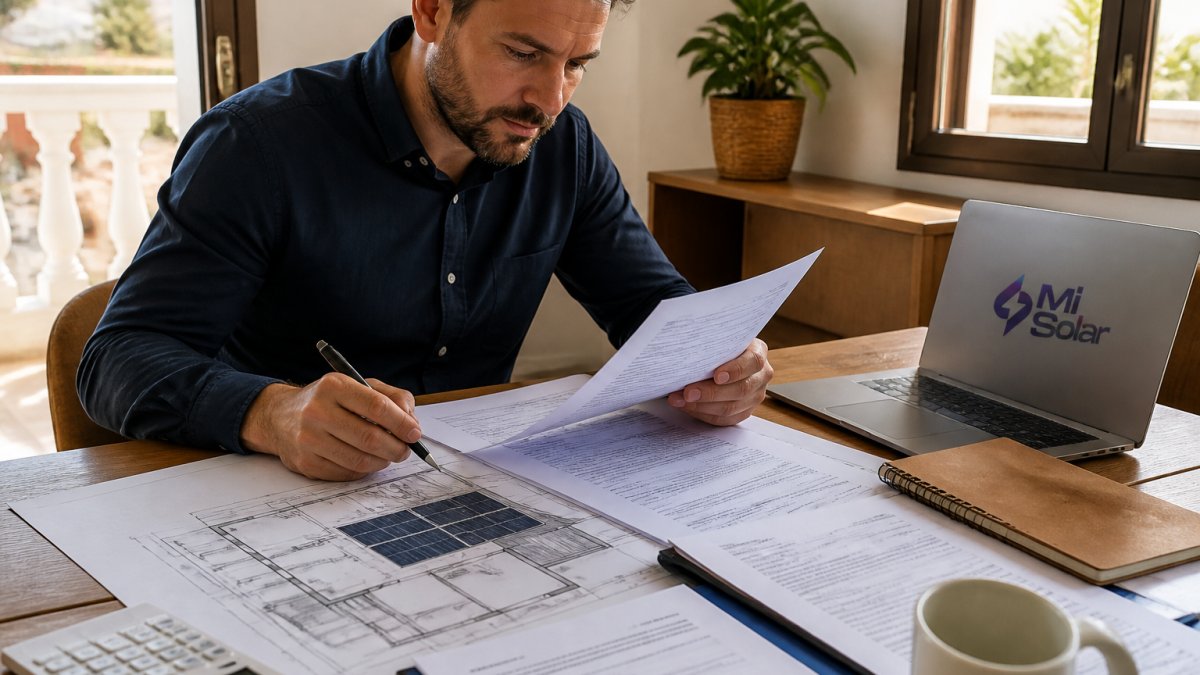
Getting the solar panel permits and paperwork together is the foundation of your entire project. You'll need multiple documents from different sources, and coordinating them takes planning.
Essential Documents for Your Application
Your application package must include:
- Completed permit request form (modelo de solicitud) from your municipality
- Proof of property ownership or authorisation to install
- Architectural plans showing panel placement and roof layout
- Structural engineer's report confirming roof load capacity
- Electrical single-line diagram of the system
- Technical specifications of all equipment (panels, inverter, wiring)
- Proof of professional installer credentials
- Signed declaration that the system meets Spanish electrical standards
Each municipality has slightly different requirements, so contact your local town hall to confirm the exact list. Some councils now accept digital submissions through their online portal, whilst others still require printed copies.
Technical Specifications and System Design
Your solar panel building permit application must include detailed technical specifications. These documents prove your system is safe and complies with electrical codes.
The technical specification sheet should list the panel model, wattage, efficiency rating, and exact quantity. Your inverter specifications must match the total system capacity. Wiring gauge, conduit type, and earthing methods all need to be documented and must meet REBT (Reglamento Electrotécnico de Baja Tensión) standards.
A structural engineer's report is mandatory in most municipalities. This confirms your roof can safely support the weight of panels, mounting hardware, and snow loads. The engineer calculates structural stress and certifies the installation won't compromise building integrity.
The CIE Electrical Certificate for Solar Systems
The CIE (Certificado de Instalación Eléctrica) is Spain's electrical installation certificate. This document confirms your solar system meets all electrical safety standards and is legally compliant.
You cannot obtain a CIE until after your system is physically installed and tested. A qualified electrician must inspect the completed installation, run safety tests, and verify everything meets REBT requirements. Only then can they issue the CIE.
The CIE is essential. Without it, your system cannot be legally connected to the grid or registered with your electricity distributor. Many homeowners don't realise this certificate is separate from the building permit, you need both documents.
Solar Installation Legalisation: The Final Steps
Solar installation legalisation is the process of officially registering your completed system with the grid operator and local authorities. This is the final step that makes your installation fully legal and operational.
After your CIE is issued, you submit it to your electricity distributor (Red Eléctrica or your regional distributor) along with a connection request. The distributor inspects the external connection point, installs a bidirectional meter if needed, and activates your system for grid connection.
Simultaneously, you register your installation with the local tax authority (Hacienda) for the purposes of the IRPF (personal income tax) documentation. This is straightforward but essential for legal compliance.
The entire legalisation process typically takes 2-4 weeks after you have your CIE in hand. During this time, your system is installed but not yet legally operational.
Timeline and Common Delays
The complete permitting and installation timeline usually spans 12 to 20 weeks from start to finish. Here's what to expect:
Building permit application and approval: 4-12 weeks. Incomplete submissions reset this timer. System design and procurement: 2-4 weeks. Installation and testing: 1-2 weeks. Grid connection and legalisation: 2-4 weeks.
Common delays include incomplete initial applications, municipal backlogs during summer months, missing structural engineer reports, and delays from the grid operator. Winter weather can also slow installation schedules.
Many municipalities experience significant delays between June and September due to holiday closures. Submitting your application in April or May gives you a better chance of approval before summer slowdowns.
Common Mistakes to Avoid
The biggest mistake homeowners make is starting installation before permits are approved. This creates legal liability and can result in fines or forced system removal.
Another common error is underestimating how long the permitting process takes. Homeowners often expect 4-6 weeks and are shocked when it stretches to 12 weeks. Plan for the longer timeline and be pleasantly surprised if it's faster.
Not hiring a qualified, licensed installer is a critical mistake. Your installer must be registered with the relevant electrical authority and capable of obtaining the CIE. Cutting costs here creates legal problems later.
Many homeowners also fail to check their specific municipality's requirements before applying. Each council has slightly different rules. What works in one town might not meet another's standards. Always confirm requirements directly with your local Ayuntamiento.
Getting solar permits in Spain requires patience, attention to detail, and understanding the multi-step process. The building permit, technical specifications, CIE certificate, and grid registration are all essential pieces. Mistakes or missing documents can delay your project by months. MiSolar manages the entire permitting and installation process for homeowners across the Costa Blanca North, handling every document, inspection, and registration requirement. Our Residential Solar Installation and Solar PV Installation Services ensure your system is fully legal and operational from day one. We also offer complementary services such as EV charger installation and Solar Pool Heater solutions to maximise the benefits of your renewable energy system. Get a quote today and let us handle the complexity whilst you focus on the energy savings ahead.
Frequently Asked Questions
How long does it take to get solar permits in Spain?
The timeline varies by municipality, but typically ranges from 4 to 12 weeks from application to approval. Initial assessment takes 2-3 weeks, whilst technical review and municipal processing can extend beyond that. Some councils experience longer delays during peak seasons. Your installer should provide a realistic estimate based on local experience. Delays often occur when documentation is incomplete, so ensure all paperwork is thorough before submission.
What is a CIE electrical certificate and why is it required?
The CIE (Certificado de Instalación Eléctrica) is a mandatory electrical installation certificate issued by a qualified electrician after your solar system is installed and tested. It confirms the system meets Spanish electrical safety standards and regulations. This certificate is essential for legalising your installation and is required before the system can be connected to the grid or registered with authorities. Without it, your system cannot operate legally.
Can I install solar panels on a holiday home?
Yes, you can install solar panels on a holiday home, and the permit process is the same as for a primary residence. However, consider your usage patterns: if you're only present a few months yearly, the financial return may take longer. Many holiday home owners find solar worthwhile for reducing bills during occupancy and increasing property value. Ensure your property documentation and ownership are current before applying for permits.
What documents do I need to submit for solar panel permits?
Required documents typically include proof of property ownership, completed permit application forms, technical system design documentation, electrical plans, a declaration of responsibility from your installer, proof of insurance, and cadastral references. Some municipalities also require environmental impact assessments or heritage assessments if your property is in a protected area. Your installer should prepare most of these; confirm the complete list with your local council before submission to avoid delays.