 how-to
How to Apply for Solar Grants 2026: Step-by-Step
Table of Contents
- What Solar Grants Are Available in 2026
- Solar Panel Funding Eligibility: Who Qualifies
- What You'll Need Before You Apply
- Step-by-Step: How to Apply for Solar Grants in 2026
- Solar Panel Grant Deadlines: Key Dates for 2026
- Solar Panels and Property Value: The Long-Term Return
- Common Mistakes to Avoid When Applying
- Conclusion: Next Steps for Your Solar Investment
- Frequently Asked Questions
Last Updated: October 7, 2026
What Solar Grants Are Available in 2026
Solar grants are subsidies and tax breaks that reduce what you pay for a home solar system. In Spain, most support now comes through tax relief rather than cash payments. We help homeowners across the Costa Blanca North work out which of these they can claim.
The main options are:
- IBI rebate (property tax discount) from your town hall
- ICIO relief (construction tax discount) on the installation
- IRPF deduction (personal income tax) on your annual return
- EU-funded local schemes run by some municipalities
The key change for 2026: the national self-consumption tax deduction has ended for new installations. That means local tax relief and town hall grants matter more than ever.
Solar Panel Funding Eligibility: Who Qualifies
Solar panel funding eligibility comes down to two things: where the property is, and who pays the tax. You must own the property and the installation must meet current rules.
Property and Residency Requirements
The property must be your main home or a home you own, and it must sit in a municipality that runs a scheme. Rules differ from town to town. Some councils cap the rebate by system size or by the value of the works.
Residency status does not block most tax relief, but non-residents file differently. Holiday home owners can still claim IBI and ICIO reductions where offered. The IRPF deduction is trickier for non-residents, so check your filing position first.
Income and Tax Status Criteria
IRPF deductions depend on your taxable income, and the percentage drops as income rises. IBI and ICIO relief do not depend on income at all. They are set by the council, not by your tax return.
What You'll Need Before You Apply
Solar grant application documents are where most applications stall. Gather everything before you start, or you will be chasing paperwork for weeks.
You will typically need:
- DNI or NIE for every owner
- Proof of ownership: escritura or nota simple
- Last IBI receipt
- Installer's quote with a full breakdown
- Company registration details of the installer
- Bank details for any payment
Technical Documentation for Your Property
Your installer should supply the technical file. This usually includes the project description, a single-line electrical diagram, panel and inverter datasheets, and the certificate of the installation.
You will also need the REBT compliance certificate and, in many cases, a CIE (installation certificate) registered with your regional authority. Confirm who files these: you or the installer.
Step-by-Step: How to Apply for Solar Grants in 2026
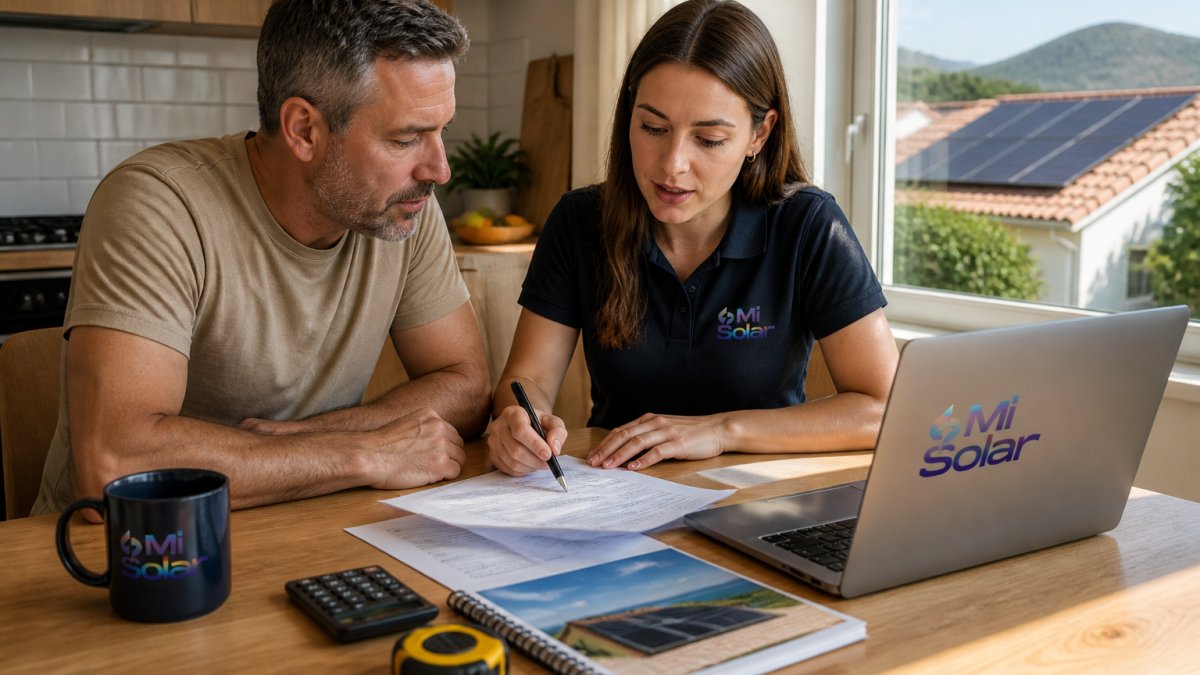
Here is how to apply for solar grants 2026 in practice. The exact order depends on your council, but the sequence below covers every scheme we deal with.
Step 1: Confirm Your Eligibility and Choose the Right Grant
Check your town hall's website for the current IBI and ICIO scheme. Confirm the deadline, the cap, and whether funds remain. Then check whether the IRPF deduction applies to your income bracket.
Pick the schemes you actually qualify for. Do not apply for everything.
Step 2: Gather Your Solar Grant Application Documents
Assemble the full pack from the section above. Make digital copies of each document. Councils increasingly want online submissions, and blurry scans get rejected.
Step 3: Submit Your Application and Track Progress
File the application and keep the receipt with your reference number. Follow up every few weeks. Approval times vary widely by council and by scheme.
For the IRPF deduction, claim it on your annual return using the installer's invoice and your certificate of works.
| Step | What You Do | Timeframe |
|---|---|---|
| 1 | Confirm eligibility and pick schemes | 1-2 weeks |
| 2 | Gather and copy documents | 1-3 weeks |
| 3 | Submit and track | Varies by council |
Solar Panel Grant Deadlines: Key Dates for 2026
Solar panel grant deadlines are set locally, so there is no single national date. Most town hall schemes run on an annual budget that closes when funds are used up.
What to watch:
- Annual budget windows that open early in the year
- Application cut-offs tied to the tax year for IRPF
- Fund exhaustion, which can close a scheme early
Solar Panels and Property Value: The Long-Term Return
Solar panels and property value move together in this region. A home with lower running costs is easier to sell and easier to rent out.
The real return comes from two places. First, lower bills every month. Second, a more attractive property when you sell. Buyers here ask about energy costs, and a solar home answers that question before it is asked.
We design systems around your actual consumption, not a generic template. That is what turns a subsidy into a genuine return. Many owners also pair their system with Residential Solar Installation and Solar PV Installation Services and add an EV charger installation to make the most of the power they generate.
Common Mistakes to Avoid When Applying
The biggest mistake is applying after the works are finished. Many councils require approval before installation starts.
Other traps we see:
- Missing the IBI application window
- Submitting incomplete document packs
- Assuming the old national deduction still applies
- Not registering the installation certificate
A common mistake is treating the grant as guaranteed. Budget for the system on its own merits, and treat any relief as a bonus.
Conclusion: Next Steps for Your Solar Investment
The 2026 landscape rewards homeowners who move early and get the paperwork right. Local tax relief is still available, but the windows are tight and the funds are limited.
MiSolar manages the whole process for you. We handle engineering, permitting and procurement in-house, design a system around your consumption, and offer innovative financing plans to spread the cost. With over 300 installations and a 5.0-star rating, we stay with you long after commissioning.
Get a quote from MiSolar and start your application with the paperwork already in order.
Frequently Asked Questions
Are solar grants available to homeowners in 2026?
Yes, several regional and national programmes continue to support residential solar in 2026. These include deductions on IBI and ICIO taxes offered by many municipalities, plus regional subsidies tied to energy efficiency improvements. Availability varies by area, so check your local town hall and regional energy agency. A qualified installer can confirm which grants apply to your property type and location before you commit to any work.
What documents do I need to apply for solar funding?
You will typically need your DNI or NIE, proof of property ownership or authorisation, the most recent electricity bill, a technical report or project specification signed by a qualified installer, and in some cases your latest tax return. For regional subsidies, additional forms may be required. Having these ready before you start shortens the process significantly.
Can I apply for solar funding before installing panels?
In most cases you must apply before installation begins, and some grants require pre-approval before any work starts. Installing first and applying later often disqualifies you. Always confirm the sequence with the granting body or your installer.
How long does a solar grant application take?
Processing times vary by programme and region. Some municipal tax deductions are applied automatically at the next billing cycle, while regional subsidies can take several months. Incomplete applications cause most delays. Submitting a full, correct document pack the first time is the single biggest factor in speeding things up. Your installer should track the application and respond to any requests for additional information promptly.