
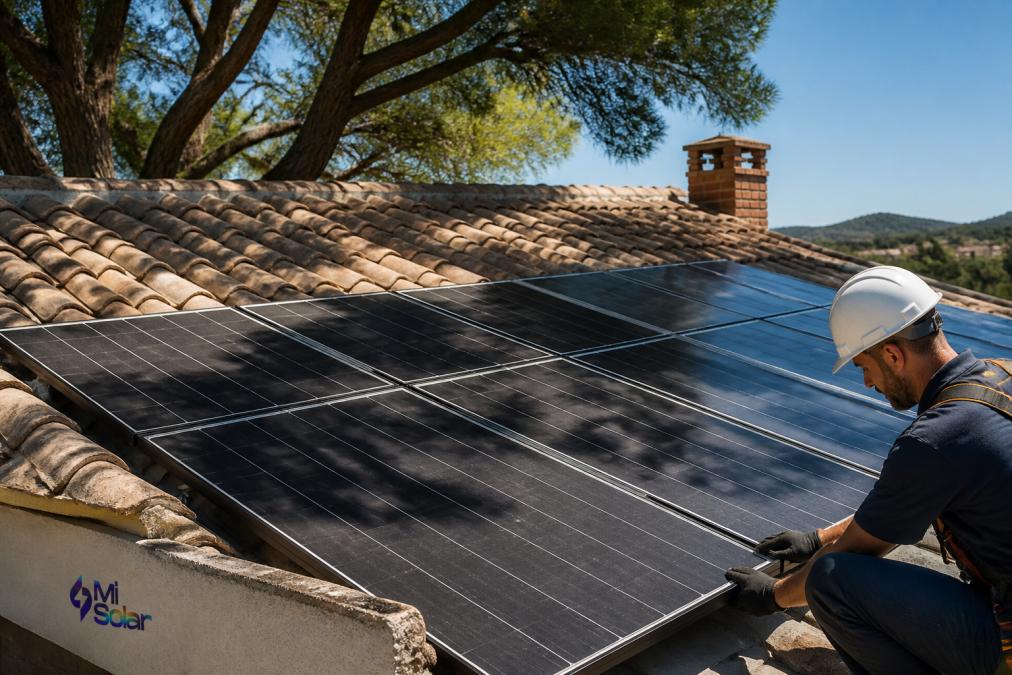
 how-to
Solar Panels for Shaded Roofs: What Actually Works
Table of Contents
- How Shade Actually Affects Solar Panel Output
- Microinverters vs String Inverters for Shade
- Solar System Design for Complex Roof Layouts
- How to Assess Shade on Your Roof Before You Buy
- How to Protect Solar Cables from Salt Air Corrosion
- Battery Storage and Shade: Making the Most of What You Generate
- Conclusion
- Frequently Asked Questions
Last Updated: September 16, 2026
How Shade Actually Affects Solar Panel Output
Shade does not reduce solar output proportionally. A single shaded cell can cut a panel's output far more than the shaded area suggests, which is why solar panels for shaded roofs need different equipment from a clear, south-facing array.
The reason is electrical, not optical. Panels are wired in series, so current flows through every cell in a string. When one cell is shaded, it restricts the current passing through the entire string, much like a kink in a garden hose. A shadow covering one-tenth of a panel can knock out a third of that panel's production, and in a string configuration it drags down every panel behind it.
Shade type matters as much as shade quantity. A hard shadow from a chimney or a neighbouring pine tree is predictable and analysable. A soft, dappled shadow from a palm frond moves across the roof through the day and is harder to design around but rarely catastrophic. Afternoon shade from a neighbour's tree, the most common complaint we hear at MiSolar, is usually a solvable problem rather than a dealbreaker.
What most guides miss is that shade losses compound with heat. A shaded panel runs cooler, which helps slightly, but the string imbalance it creates costs far more than the temperature gain returns.
Microinverters vs String Inverters for Shade
The best inverter choice for a shaded roof is microinverters, because they isolate each panel's output so one shaded panel cannot drag down its neighbours. For roofs with heavy or unpredictable shade, that isolation is worth the extra cost.
Here is how the three main options compare:
| Option | Shade Handling | Best For | Main Trade-off |
|---|---|---|---|
| String inverter | One shaded panel limits the whole string | Unshaded, uniform roofs | Lowest cost, worst shade tolerance |
| Power optimisers | Per-panel isolation, string inverter retained | Partly shaded roofs | Middle cost, added hardware |
| Microinverters | Full per-panel independence | Complex, heavily shaded roofs | Highest cost, easiest to expand |
When a String Inverter Still Makes Sense
A string inverter remains the sensible choice when your roof is genuinely clear. If shade analysis shows no obstruction during peak generation hours, paying for per-panel electronics buys you nothing. String inverters cost less, have fewer components to fail, and are simpler to service. The mistake is choosing one because it is cheaper without first measuring the shade.
Why Optimisers Sit Between the Two
Power optimisers attach to each panel and perform maximum power point tracking at panel level, while a central string inverter still handles the conversion. This recovers most of the loss a shaded panel would cause, at a lower cost than full microinverters. For a roof with one problematic chimney or a single tree, optimisers on the affected panels often deliver the best value. A common mistake is fitting optimisers across every panel when only four or five actually need them.
Solar System Design for Complex Roof Layouts
Complex roof layouts change the design rules. Multiple pitches, dormers, hips and valleys mean panels face different directions and receive different irradiance at different times, so a single string assumption rarely holds.
Good design for complex layouts follows a few principles:
- Group panels by orientation and shade exposure before wiring them into strings
- Keep heavily shaded panels on their own circuit or on optimisers
- Avoid splitting a string across two roof pitches with different angles
- Leave space around obstructions for airflow and future maintenance access
A roof with three pitches and a dormer is not a problem to be forced into a standard template. It is a design exercise. At MiSolar, we survey roof type, orientation and local obstructions before specifying anything, because a system sized for a straightforward roof will underperform on a complex one.
How to Assess Shade on Your Roof Before You Buy
Assessing shade properly takes a site visit and a full day of observation, not a glance from the garden. The goal is to map which parts of the roof are shaded, when, and for how long.
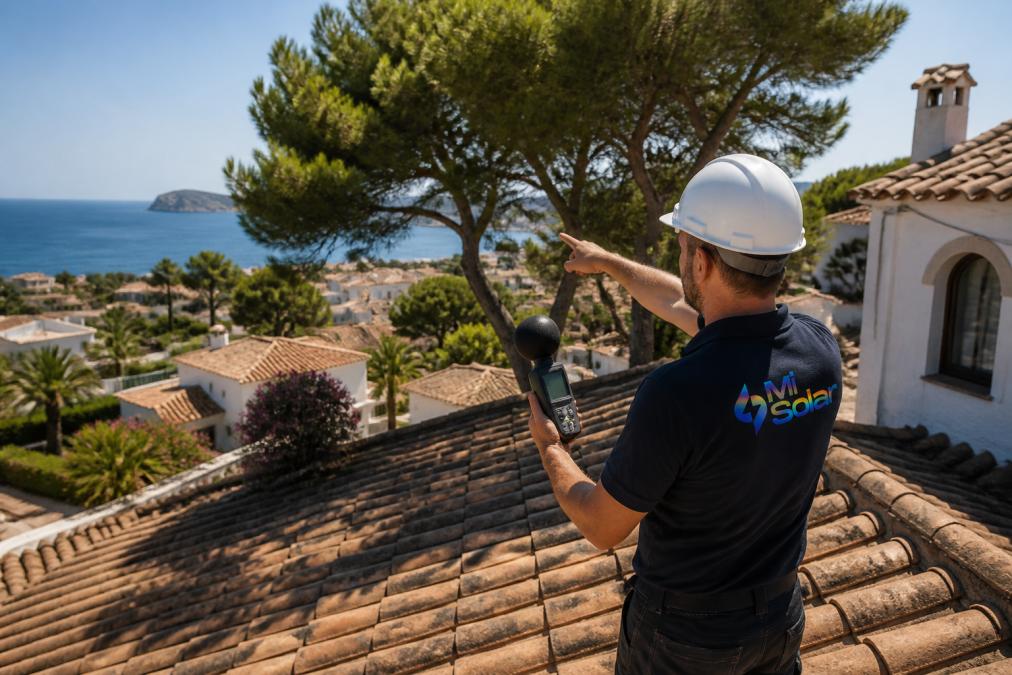
Follow this sequence:
- Identify the obstructions. Trees, chimneys, dormers, neighbouring buildings and TV masts all cast shadows. Note which are permanent and which grow.
- Track the shadow through the day. Check the roof at morning, midday and late afternoon. The afternoon shadow is the one most homeowners underestimate.
- Repeat in a low-sun month. Winter shadows are longer and reveal obstructions that summer hides.
- Map the shaded zones. Mark which roof areas lose sun and for how many hours.
- Match the design to the map. Route shaded zones to optimisers or microinverters and keep clear zones on standard strings.
If a tree is the culprit, trimming may solve it more cheaply than any electronics. If it belongs to a neighbour, that is a conversation, not a purchase decision.
How to Protect Solar Cables from Salt Air Corrosion
Salt air corrodes solar cabling faster than most installers expect, so coastal systems need corrosion-resistant components and periodic inspection. The salt carried on the wind settles on exposed cable, connectors and mounting hardware, and over time it attacks the metal contacts.
Practical protection steps:
- Specify UV-resistant, marine-grade cable and corrosion-resistant connectors
- Keep connectors off the roof surface and out of standing water
- Use cable clips and conduit to prevent chafing and water pooling
- Inspect connector contacts annually for discolouration or pitting
- Rinse mounting hardware during routine maintenance if salt build-up is visible
The thing nobody tells you about coastal solar is that the failure point is usually the connector, not the panel. A cheap connector corroding in salt air can take down a string that is otherwise perfectly healthy. This is why post-commissioning checks matter as much as the initial install.
Battery Storage and Shade: Making the Most of What You Generate
Battery storage changes the maths on a shaded roof. If your array produces less than an unshaded system, storing what it does generate and using it in the evening stretches every kilowatt-hour further.
A shaded roof with a battery can still cut a substantial share of grid reliance, because the system shifts self-consumption rather than chasing maximum generation. For holiday homeowners who are away for months, a battery paired with monitoring lets you track performance remotely and confirms the system is working while the property is empty.
Sizing matters. Oversizing a battery against a shaded array means paying for storage you cannot fill. The right approach is to size the battery to actual generation, not to an idealised roof.
Conclusion
A shaded roof is a design problem, not a disqualification. The right combination of per-panel electronics, careful layout and honest shade analysis can turn a difficult roof into a productive one, and battery storage helps you use every unit you generate.
MiSolar handles the whole process in-house, from engineering and system design to permitting, procurement and on-site works, with post-commissioning monitoring to confirm the system performs as promised. With over 300 installations across the Costa Blanca North, our team designs around shade rather than pretending it is not there.
Get a quote from MiSolar and find out what your roof can actually generate.
Frequently Asked Questions
Do solar panels work effectively in partial shade?
They work, but output drops. A single shaded panel in a traditional string setup can drag down the whole row because the inverter manages the array as one unit. With microinverters or optimisers, only the affected panel loses production. On a roof with morning or afternoon shading from trees or a neighbouring building, that difference can be 20-30% of daily yield. A proper shade assessment before installation tells you whether the numbers still stack up.
What are microinverters and how do they help with shaded roofs?
A microinverter sits under each individual panel and converts DC to AC on the spot. Because every panel operates independently, shade on one does not pull down the rest. This suits shaded roofs, complex layouts and panels facing different directions. The trade-off is higher upfront cost and more components on the roof. For a villa with a chimney, dormer or tree line cutting across part of the array, the extra yield usually justifies it.
How can I assess if my roof has too much shade for solar panels?
Start by noting which hours your roof is shaded and by what. A neighbour's tree that loses leaves in winter is a different problem to a permanent building shadow. Installers use shade analysis tools that model the sun's path across the year and calculate production hour by hour. If more than roughly 30% of your prime generating hours are blocked, the system may not pay back in a reasonable timeframe. A site survey gives you a clear answer.
Does a shaded roof still make financial sense with battery storage?
It can. A shaded array produces less, so storing what you do generate becomes more valuable. A battery lets you use midday production in the evening instead of exporting it at a low rate. For holiday homeowners who are away for months, a battery paired with a shaded system still reduces bills during visits and adds property value. The right sizing depends on your consumption pattern, so ask for a design based on your actual usage.