
 how-to
Solar System Performance Guarantees Explained: 2026 Guide
Table of Contents
- What a Solar Performance Guarantee Actually Covers
- How Installers Calculate Performance Guarantees
- Solar Panel Degradation Rates Explained
- How to Monitor Solar Energy Production
- Solar System Maintenance Requirements That Protect Your Guarantee
- How to Claim on a Performance Guarantee
- What Can Void a Performance Guarantee
- Frequently Asked Questions
Last Updated: September 13, 2026
What a Solar Performance Guarantee Actually Covers
A solar performance guarantee is a contractual promise that your installed system will generate a minimum amount of electricity over a defined period, with financial compensation if it falls short. Most people buying a solar system on the Costa Blanca North assume the manufacturer's warranty covers everything. It doesn't.
The performance guarantee is the installer's or developer's commitment, not the panel maker's. It sets a floor for production, usually expressed in kilowatt-hours per year or as a percentage of an estimated yield. If your system underperforms that floor and the cause isn't excluded, you're owed a top-up, a repair, or a payment.
This matters more than the headline price of a quote. A cheaper system with a weak guarantee can cost you far more over twenty years than a well-specified one with a firm production floor.
Performance Guarantee vs Product Warranty: The Key Differences
A product warranty covers manufacturing defects: a panel that delaminates, an inverter that fails, a mounting bracket that corrodes. It's about hardware. A performance guarantee covers output: whether the system delivers the energy it was designed to produce. It's about results.
| Feature | Product Warranty | Performance Guarantee |
|---|---|---|
| What it covers | Defects, failures, workmanship | Minimum energy output |
| Who provides it | Manufacturer, sometimes installer | Installer or developer |
| Typical trigger | Component breaks or malfunctions | Production falls below agreed figure |
| Remedy | Replacement or repair | Payment, top-up, or system fix |
| Duration | Varies by component | Usually 20-25 years |
The two work together. A failed inverter is a warranty claim. A system that runs fine but produces less than promised is a performance claim. Homeowners who conflate them often miss the remedy they're actually entitled to.
How Installers Calculate Performance Guarantees
Installers calculate performance guarantees by modelling expected output from your specific roof, orientation, shading profile, and local irradiance, then applying a safety margin. The resulting figure is the guaranteed minimum, not the optimistic best case.
The calculation typically starts with a simulation tool that factors in panel tilt, azimuth, and known shading. A common mistake is accepting a guarantee built on ideal assumptions: a clean array, no shading, perfect weather. In practice, a neighbour's tree that casts a shadow at 4pm in July changes the number.
Most providers guarantee somewhere in the region of 80 to 90 per cent of the modelled yield. That buffer protects them against normal weather variation. If a quote guarantees 100 per cent of an estimate, treat it as a warning sign rather than a selling point.
What Factors Affect the Output Figures
Several variables move the guaranteed figure up or down:
- Shading: Afternoon shade from trees or neighbouring buildings is the single biggest reducer of yield, and it's often underestimated at the quoting stage.
- Orientation and tilt: South-facing arrays at the optimal pitch produce the most; east-west splits trade peak output for a flatter daily curve.
- Soiling and dust: Coastal and dusty environments reduce output between cleanings.
- Temperature: Panels lose efficiency as they heat up, which matters on a hot roof in August.
- Component quality: Inverter efficiency and panel tolerance affect the real-world figure.
If any of these are glossed over in your quote, ask directly how they were modelled.
Solar Panel Degradation Rates Explained
Solar panel degradation is the gradual decline in a panel's power output over its lifetime, and it's the reason guarantees are structured as a declining curve rather than a flat number. A typical performance guarantee will promise, for example, no more than a small percentage of loss in year one, then a smaller annual decline thereafter (unef.es).
Manufacturers usually publish a degradation curve with the panel datasheet. The first-year drop is the steepest, then the rate flattens for the remaining life of the module. The guarantee should reference this curve explicitly, so you know the minimum output you can expect in year 10, year 15, and year 25.
What most guides miss is that degradation is measured against the panel's rated capacity, not against your system's real-world yield. A panel can be well within its degradation spec and still underproduce because of shading, soiling, or a poorly sized inverter. Check both figures. Distinguishing between these operational inefficiencies and genuine hardware failure remains essential when consulting a system warranty guide to determine if your equipment is truly underperforming.
How to Monitor Solar Energy Production
Monitoring solar energy production means tracking your system's actual output against the guaranteed figure, usually through an inverter app or a dedicated monitoring portal. Without monitoring, you cannot know whether you have a claim, and many guarantees require you to report underperformance within a set period.
Modern systems report production data in near real time. You'll typically see daily, monthly, and lifetime generation, plus a comparison against the original estimate. Set a monthly reminder to check the running total against the guarantee. If production drifts below the curve for two or three consecutive months, that's the point to raise it, not at the end of the year.
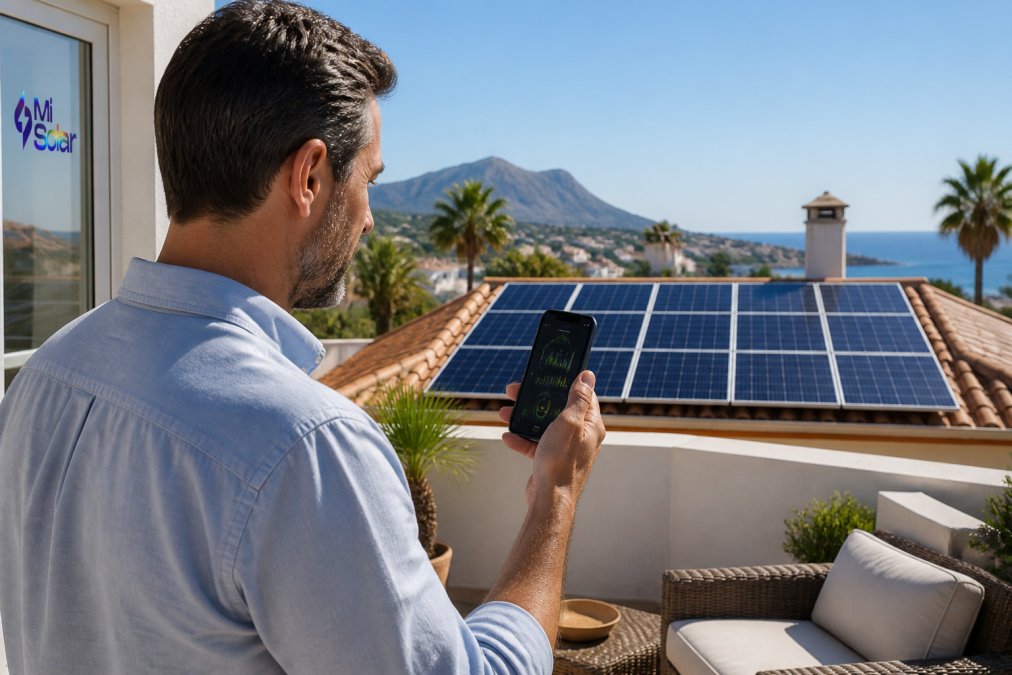
Keep your monitoring access details safe. If you sell the property, the new owner inherits the guarantee, and they'll need the login and the original documentation.
Solar System Maintenance Requirements That Protect Your Guarantee
Solar system maintenance requirements are the routine checks and cleanings that keep your system within the conditions of the guarantee, and skipping them is the fastest way to weaken a claim. Most performance guarantees are conditional: they assume the system is kept reasonably clean, unobstructed, and operational.
What that means in practice:
- Cleaning: Remove dust, salt, and bird droppings periodically, more often in dusty or coastal locations.
- Vegetation: Keep trees and shrubs trimmed so they don't shade the array, especially in the afternoon.
- Visual checks: Look for cracked glass, hot spots, or loose cabling after storms.
- Inverter checks: Confirm the inverter is running and error-free; a silent inverter is a silent loss.
- Professional inspection: An annual check catches faults that monitoring alone won't flag.
Document what you do and when. If you ever need to claim, a simple maintenance log is strong evidence that you held up your side of the agreement.
How to Claim on a Performance Guarantee
To claim on a performance guarantee, you typically notify the provider in writing with your monitoring data, the shortfall against the guaranteed figure, and evidence that maintenance conditions were met. The provider then investigates before deciding on a remedy.
The process usually runs like this:
- Gather your evidence. Export monitoring data covering the underperforming period, and collect your maintenance records.
- Compare against the guarantee. Show the actual output against the guaranteed minimum for the same period.
- Notify the provider in writing. State the shortfall clearly and reference the guarantee clause.
- Allow an inspection. The provider will check for faults, shading, or soiling that explain the gap.
- Receive the remedy. Depending on the cause, this may be a repair, a system adjustment, or a financial top-up.
The remedy depends on the cause. If a faulty component is at fault, it's fixed under warranty. If the system simply underproduces, the guarantee's compensation clause applies. Read that clause before you sign anything, because it defines what you actually get.
What Can Void a Performance Guarantee
A performance guarantee can be voided by actions or conditions that breach its terms, and most of them are avoidable. The usual culprits are unauthorised modifications, neglected maintenance, and new obstructions.
Watch for these:
- Unauthorised alterations: Adding panels, swapping the inverter, or rewiring without approval can void the guarantee entirely.
- New shading: A hedge, extension, or neighbouring building that blocks the array after installation.
- Missed maintenance: Documented neglect of cleaning and inspection.
- Non-payment: Unpaid financing or invoices can suspend guarantee obligations.
- Force majeure and grid issues: Many guarantees exclude losses from grid outages or extreme weather beyond the provider's control.
The honest limitation here is that guarantees are not insurance against everything. They protect you against underperformance from design and equipment, not against a tree your neighbour plants next spring. Read the exclusions before you commit, and if a clause is unclear, get it explained in writing.
Frequently Asked Questions
What is the difference between a solar performance guarantee and a product warranty?
A performance guarantee promises a minimum energy output over time, usually 80-90% of the original rating after 25 years. A product warranty covers manufacturing defects in panels, inverters or mounting hardware. The guarantee protects your investment return; the warranty protects against faulty equipment. Both should be in writing and both matter when you assess a solar installation.
Are solar performance guarantees legally binding in Spain?
Yes, when they form part of the signed contract. Under Spanish consumer protection rules, the agreed output figures are enforceable. Keep the signed contract, the technical annex with estimated production data and any monitoring reports. If output falls short, you can request remediation or compensation through the contract terms or consumer authorities.
Does my solar system's degradation rate affect the performance guarantee?
Degradation is the annual loss of panel output, typically 0.5-0.8% per year for modern modules. Guarantees are set around that curve. If your panels degrade faster than the guaranteed rate, you have a claim. Monitoring production against the guarantee baseline is the only way to spot faster-than-expected degradation early.
What factors might void a solar performance guarantee?
Common reasons include missed maintenance, unauthorised modifications, physical damage from storms or debris, shading added after installation, and not reporting faults within the required period. Some guarantees also require you to keep monitoring active and allow annual inspections. Read the exclusions carefully before signing.
Choosing a solar system comes down to trusting the numbers behind the promise. MiSolar designs each system around your actual roof, shading, and consumption, then backs it with a clear performance guarantee, in-house management of engineering and permits, and post-commissioning monitoring and performance checks. With over 300 installations and a 5.0-star rating, we make the guarantee something you can verify, not just read. Get a quote from MiSolar and see exactly what your system will produce.